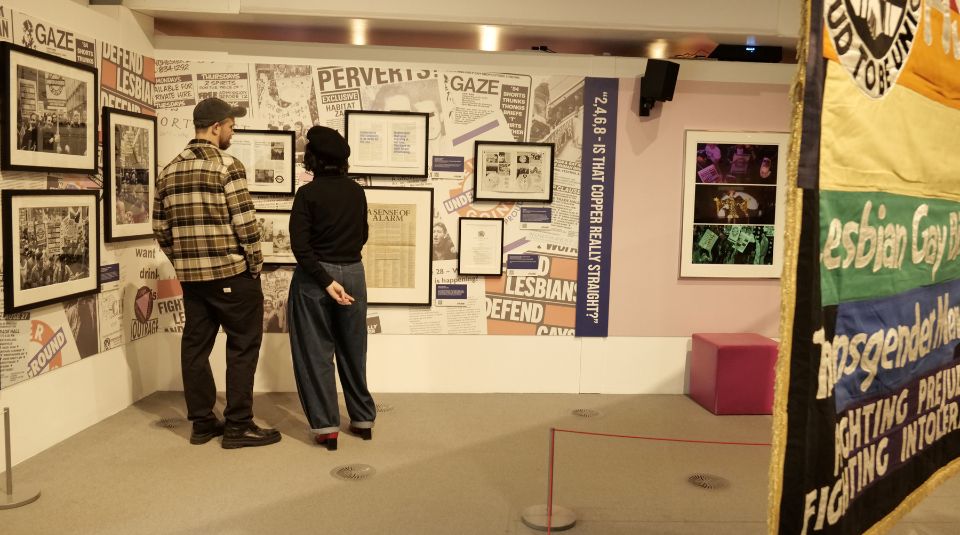
Re/Assemble is now open on Gallery Two at People’s History Museum (PHM) until 3 January 2027. Curated by IAP:MCR, the exhibition explores LGBTQIA+ protests in Manchester, in particular the 1988 Section 28 protest in Manchester.
For LGBT+ History Month 2026 we caught up with its curator, Artistic Director Jez Dolan, to find out about the exhibition and the events of 1988 that created the spark for a project to archive its memories and its legacy.
Re/Assemble traces moments of activism that have shaped Manchester’s queer communities. Its focus is on what would become known as the ‘Never Going Underground’ march, which took place in Manchester in 1988, against Section 28 – a clause in the Local Government Act that prohibited the so-called ‘promotion of homosexuality’ by schools and local authorities.
At IAP:MCR we create and present new visual and performing art made by artists who identify as queer across Manchester and beyond. Over the last two years we’ve been working on a project called ‘Protest! Documenting Dissent’. Supported by The National Lottery Heritage Fund, it is archiving recollections and responses to Section 28 and Manchester’s long history as a radical city. One of the creative outcomes of this is the Re/Assemble exhibition at PHM.
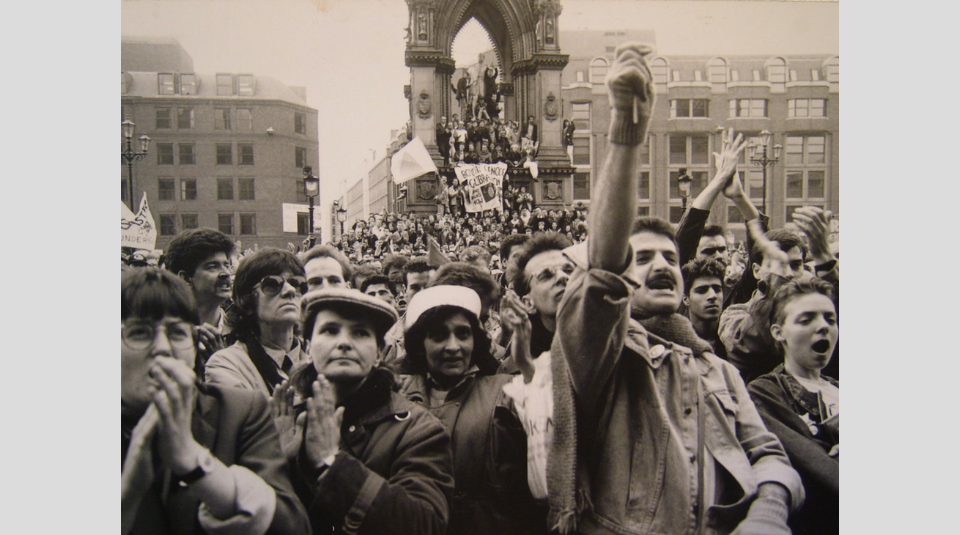
Section 28 of the Local Government Act 1988 banned local authorities from ‘promoting homosexuality’. Its impact significantly affected LGBTQIA+ communities. For example, the new law prohibited teachers from discussing same-sex relationships and prevented libraries from stocking books and films with LGBTQIA+ themes. It wasn’t until 2000 that it was repealed in Scotland, and 2003 in England and Wales.
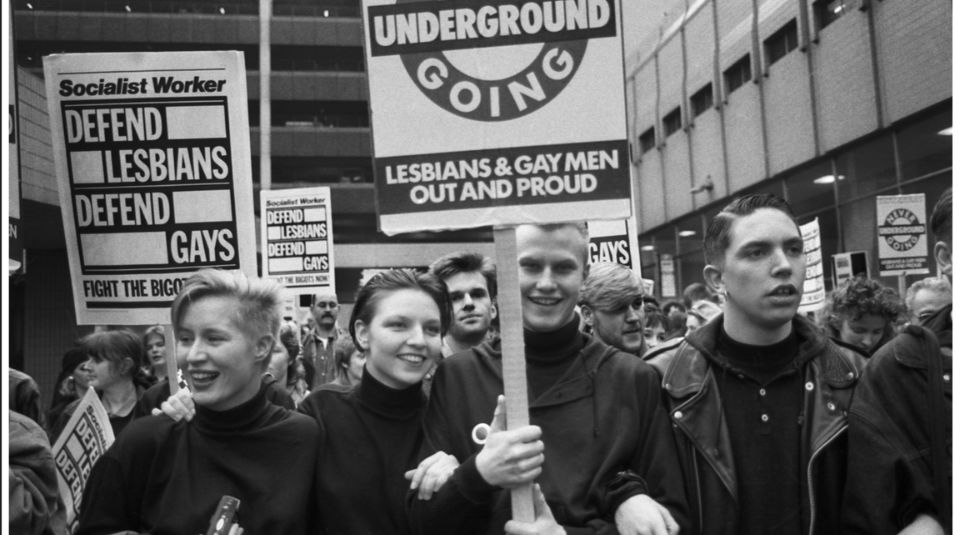
On 20 February 1988 over 20,000 people gathered in Albert Square in Manchester to protest against Section 28. The march, in which protestors can be seen carrying banners and placards with the words ‘Never Going Underground’ in proud defiance, would be the largest LGBTQIA+ demonstration in British history. The activism inspired by Section 28, including this march, led to one of the most significant civil rights movements in British history.
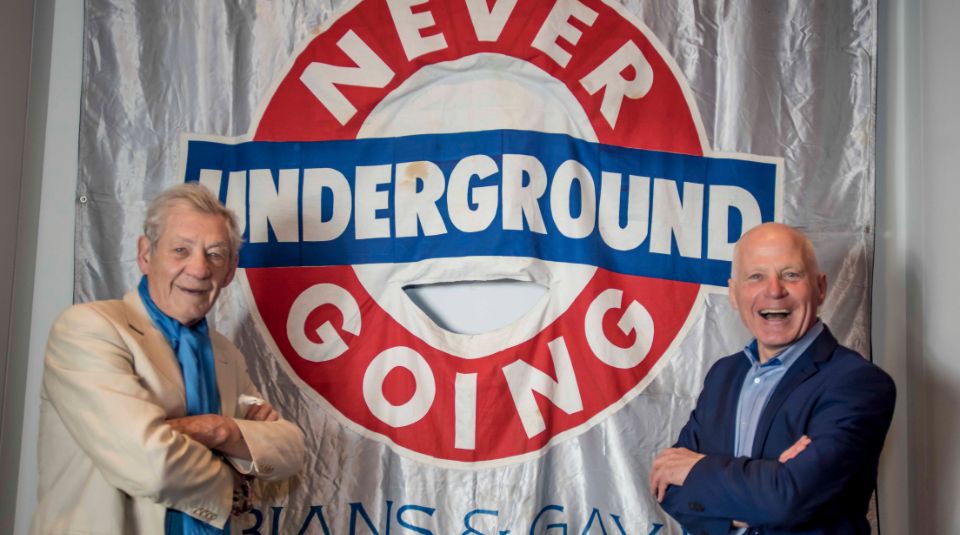
People’s History Museum’s collection includes one of the original ‘Never Going Underground’ banners, which features the subverted London Underground roundel that was adopted by the protestors.
This was a key moment in the history of protest in Manchester, which brought together people from a wide range of different communities and beliefs, in solidarity with the LGBTQIA+ community.
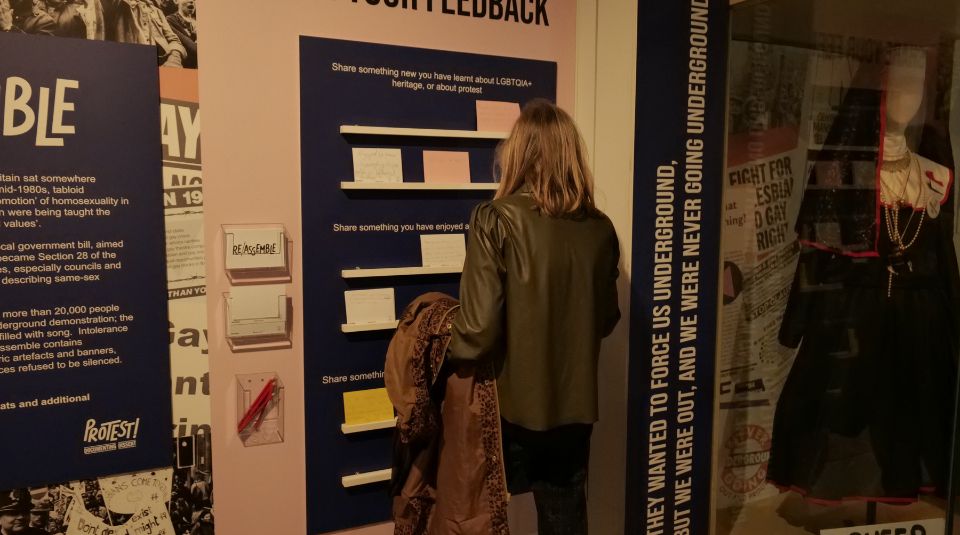
Re/Assemble documents how the LGBTQIA+ community mobilised, resisted, and created enduring cultural and political legacies that live on today. Visitors to the exhibition will encounter protest banners, badges, photographs, costumes and artworks relating to the radical history of LGBTQIA+ protest. This includes PHM’s original ‘Never Going Underground’ banner from the 1988 march.
These historical objects feature alongside a series of artist commissions as a part of the project. Each piece responds to the past, present and future of LGBTQIA+ protest, and to the collections held at People’s History Museum. The artists’ work featured includes contributions from composer Anna Appleby, photographer Lee Baxter, painter and performer Rachael Field, textile artist Sarah-Joy Ford, mixed-media artist Yuen Fong Ling, Producer and Director David Dolan Martin, and myself. Also included are images on public display for the first time by documentary photographer Peter J. Walsh (1988), who attended the Section 28 protest in Manchester.
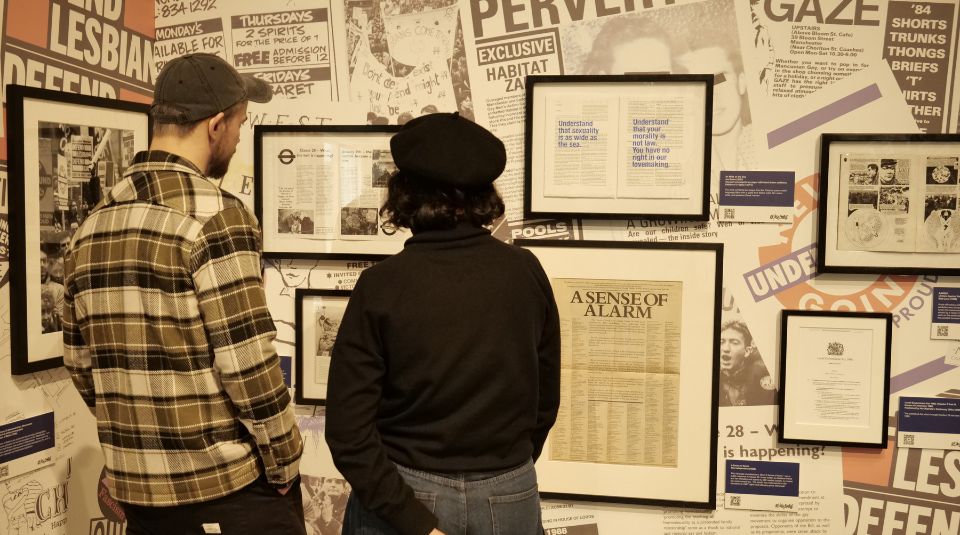
Original t-shirts, badges, banners and posters from Section 28 are all part of the museum’s extensive LGBTQIA+ collection. You can see some of these on display in the exhibition including the full-page advertisement, titled ‘A Sense of Alarm’ (1988) – a public response to Clause 28 published in The Independent – and reproductions of flyers from the archive are used in the background collage on the walls of the exhibition.
Other archive objects worth a special mention, which visitors will see in the exhibition which don’t come from PHM’s collection, include the AARGH! (Artists Against Rampant Government Homophobia) – a comics anthology produced by author Alan Moore (1988) to raise funds and awareness about Section 28, and the children’s book Jenny Lives with Eric and Martin by Susanne Bosche (1983), which provoked outcry for its depiction of everyday life in a family with gay parents.
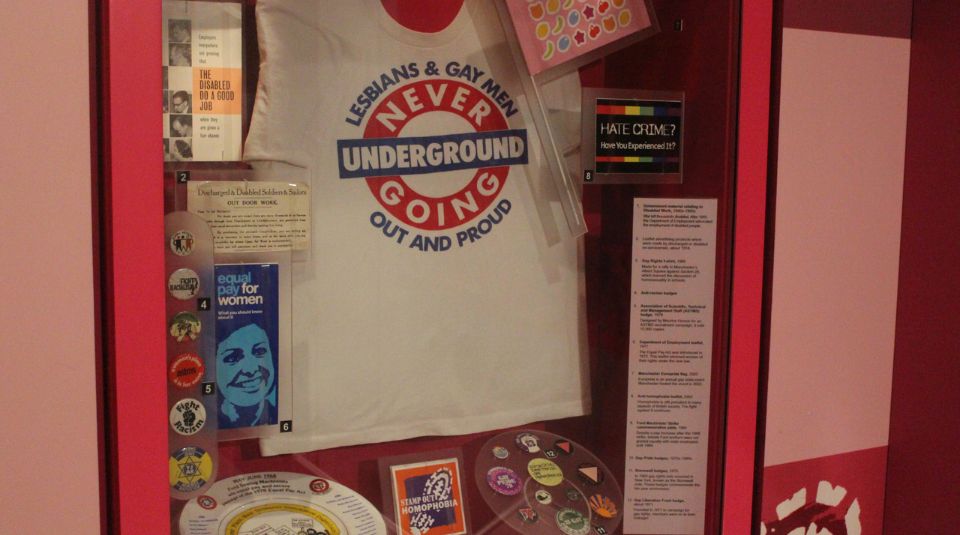
People’s History Museum tells the story of how people have come together to fight for their rights and to build a fairer future, including LGBTQIA+ rights. Visit the museum and see material including the Campaign for Homosexual Equality (CHE) in the Equalities case in Gallery Two.
Visit the Re/Assemble exhibition on Gallery Two until Sunday 3 January 2027.
Join the Re/Assemble archive exploration and guided tour taking place on Saturday 7 February in conjunction with IAP:MCR.
Book a LGBT+ History month guided tours of Re/Assemble exhibition with a member of the team at IAP:MCR who created the exhibition.
Dive into the museum’s recently digitised LGBTQIA+ badge collection in a blog with PHM Collections Assistant Morgan Beale. Morgan explores the history of the symbols and slogans, some of which are subtle and others proudly visible.
Shop PHM’s LGBTQIA+ Pride collection of items inspired by stories of LGBTQIA+ campaigners and their battle for equality.
Explore Archives+ (Manchester Archives and Local Studies) collection of Section 28 materials, especially oral histories and photographs in the Council’s local image collection on Flickr which reveal how opponents to Section 28 made their voices heard on the streets of Manchester.
Are you more independent or community focused? Experimental or measured? Prefer work or play?
Take our quick quiz to find out which radical you are!