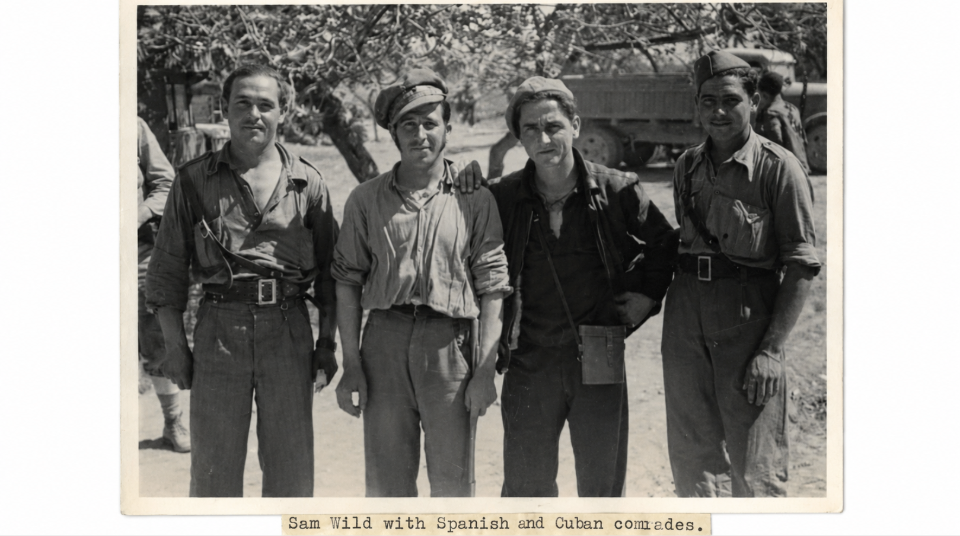
This year marks the 90th anniversary of the outbreak of the Spanish Civil War (1936-1939) – a conflict that inspired an extraordinary international response by ordinary people. We spoke to journalist Gideon Long, whose grandfather Sam Wild fought in the war with the International Brigades. Gideon recently visited the museum with a Spanish film crew who interviewed him about his grandad’s experiences.
In July 1936, army generals staged a coup against the leftwing Popular Front government that had been elected in February that year. The coup was only partially successful; some parts of Spain fell to the rebel generals while others remained loyal to the Republic, plunging Spain into war.
Faced with war, the Spanish Republic tried to buy arms and enlist support from Europe’s democracies, notably Britain and France. Meanwhile, the Nationalist forces led by general Francisco Franco were backed by Nazi Germany and Fascist Italy. Rather than coming to the aid of the Republic, Britain and France signed a non-intervention pact, refusing to back either side. Many people around the world were disgusted by this denial of help to a young democracy. They saw the rising threat of fascism in Europe and regarded Spain as a battleground where it could, and should, be opposed. So, people went to Spain to fight in defence of the Republic and Spain’s leftwing government. In all, 35,000 men and women from around 50 countries made the journey, either to fight or work as medics and ambulance drivers. The vast majority were working people motivated by their political convictions. Around 2,500 volunteers went from Britain and Ireland, 500 of whom were killed in the war.
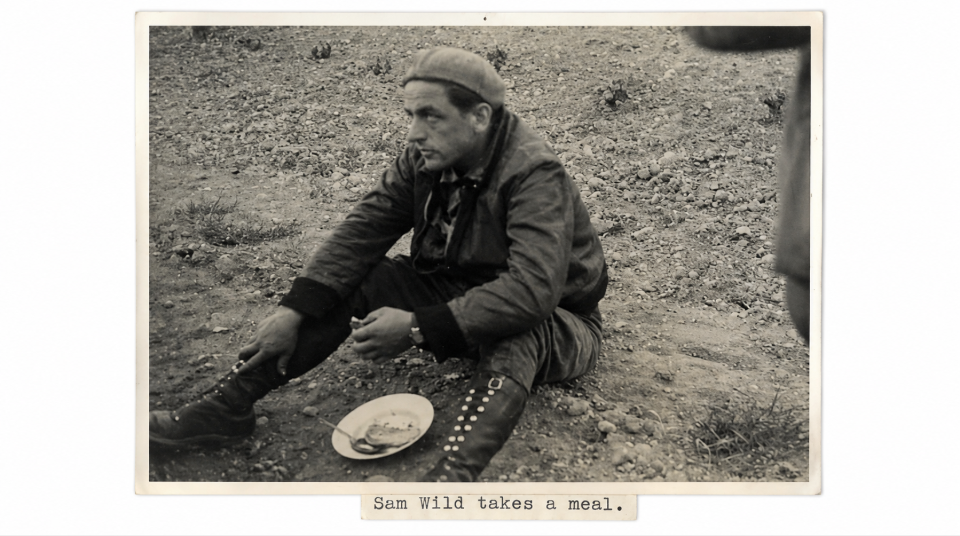
My grandad Sam Wild (1908-1983), was a working class man from Manchester who’d been involved in the National Unemployed Workers’ Movement in the 1930s. He’d also spent time in the navy, where he’d developed a disdain for what he described as ‘the boss class’. Interviewed later in life about why he went to Spain, he said:
“I’d watched Mussolini in Abyssinia, saw what Hitler was doing in Germany, the persecution of the Jews, the trade unionists and the communists, the establishment of fascism in Portugal, the Japanese in the Far East. I came to the conclusion that fascism was determined to conquer the world and it was about time someone started doing something about it. It was a profound political feeling. That was the only thing that you could do that would be of any benefit to democracy as a whole, and to the Spanish people in particular: fight.”
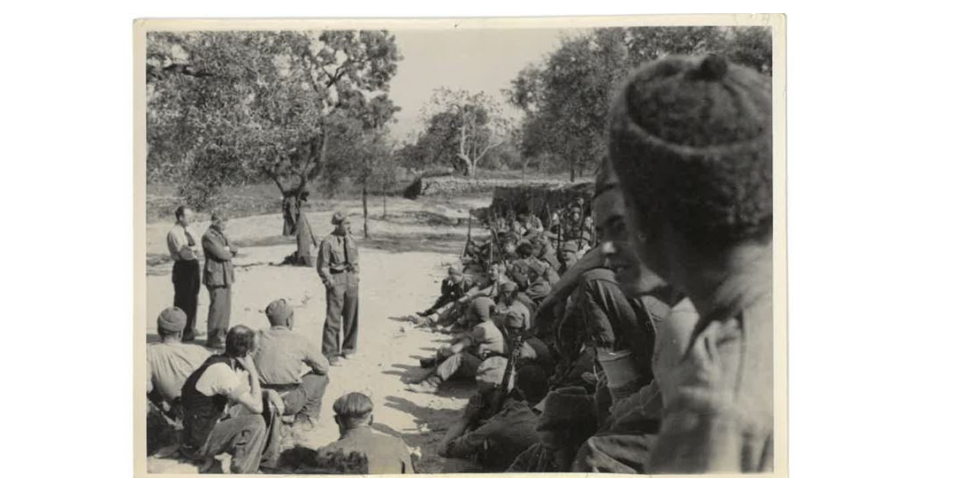
He arrived in early 1937 and was given some rudimentary military training before fighting at the battle of Jarama near Madrid. He received four bullet wounds but survived and went on to fight at the battles of Brunete, Belchite, Teruel and across eastern Spain. By late 1938 he was the commander of the British battalion of the International Brigades and led them at the battle of the Ebro, the last, big, decisive clash of the war. The Republicans lost at the Ebro and in late 1938 Sam and other survivors were withdrawn from the conflict and made their way home.
![Child's drawing including figures with guns pointed towards a child holding a flag, with text including 'La Batalla De L'ebre' ['the Battle of the Ebro'].](https://phm.org.uk/wp-content/uploads/2026/06/Child-drawings-representing-the-Battle-of-the-Ebro-around-1938-2.jpg "Drawing created by a Spanish refugee child, representing the Battle of the Ebro, around 1938. Image courtesy of People's History Museum.")
![Child's drawing including several figures lying down pointing guns, with text including 'La Batalla De L'ebre' ['the Battle of the Ebro'].](https://phm.org.uk/wp-content/uploads/2026/06/Child-drawings-representing-the-Battle-of-the-Ebro-around-1938-1.jpg "Drawing created by a Spanish refugee child, representing the Battle of the Ebro, around 1938. Image courtesy of People's History Museum.")
In Spain, devastating. Around half a million people died and Franco’s victory ushered in four decades of authoritarian rightwing dictatorship that only ended with his death in 1975. As with all civil wars, the conflict ripped families apart, pitting fathers against sons, brothers and sisters against one another, and leaving deep scars. I’ve worked as a journalist in Spain and to this day many Spaniards are reluctant to talk about the conflict. In Britain, the Spanish cause galvanised the left. My grandmother, Sam’s wife Bessie, was among many who worked in the Aid for Spain Movement, raising funds to buy food for the Republic. Some British families took in Republican refugees – notably children from the Basque country – who had fled the conflict.
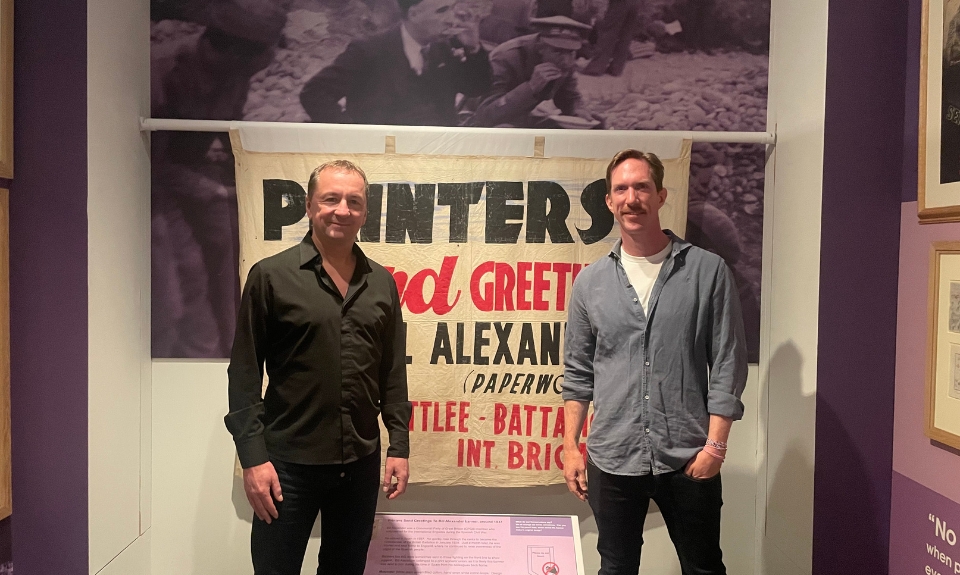
A television crew came to Manchester to make a programme about the city and talk to people here who have a connection with Spain. They were interested in Manchester’s role in the Industrial Revolution and the history of its working people, from Peterloo to the present. I took them to the museum to show them the archives and photographs of my grandad, taken in Spain during the war. The programme is due to be aired by RTVE, Spain’s public broadcaster.
In many ways, it is, or was, a forgotten war. In Spain itself, Franco suppressed all discussion of the conflict (unless it glorified his own victory). And in the rest of the world, it was overshadowed by World War II. In recent decades historians have taken more interest in the Spanish Civil War, and in Spain, people are grappling with its consequences. Mass graves are being unearthed and Franco’s legacy has been reassessed. In Britain, a ceremony is held each year at Jubilee Gardens in London to remember those who fought and died in the International Brigades. This year’s commemoration will be held on Saturday 4 July.
Join a day of collections and conversations exploring the Spanish Civil War on Saturday 11 July at People’s History Museum, with historian and author talks, a film screening, live music, book signing, and access to rare museum collections and archive materials. A partnership event with the International Brigade Memorial Trust and Instituto Cervantes.
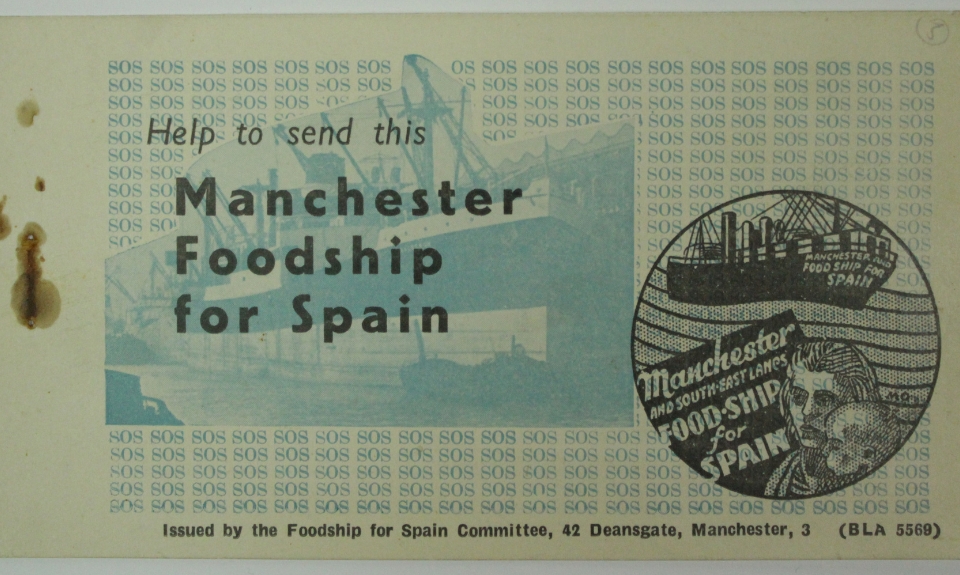
Explore collections on display in the museum’s galleries including a printers’ trade union banner supporting their Spanish counterparts and vouchers to help fund Manchester’s ‘Foodship for Spain’, along with more personal items such as a letter written by Geroge Orwell during his time fighting fascism in the Spanish Civil War, and drawings created by refugee children who fled Spain during the conflict.
Book an appointment to discover more of the collection with the Archive Team via archive@phm.org.uk. Check out the Spanish Civil War archive guide.
Commemorate the volunteers of the International Brigades at the the annual ceremony in Jubilee Gardens, London on Saturday 4 July, with music and speakers, followed by a get together at a local pub.
Support the International Brigade Memorial Trust to keep alive the memory of the men and women from Britain, Ireland, and elsewhere who went to Spain to fight fascism and defend democracy between 1936 and 1939. Become a member and sign up to receive their newsletter.
Are you more independent or community focused? Experimental or measured? Prefer work or play?
Take our quick quiz to find out which radical you are!