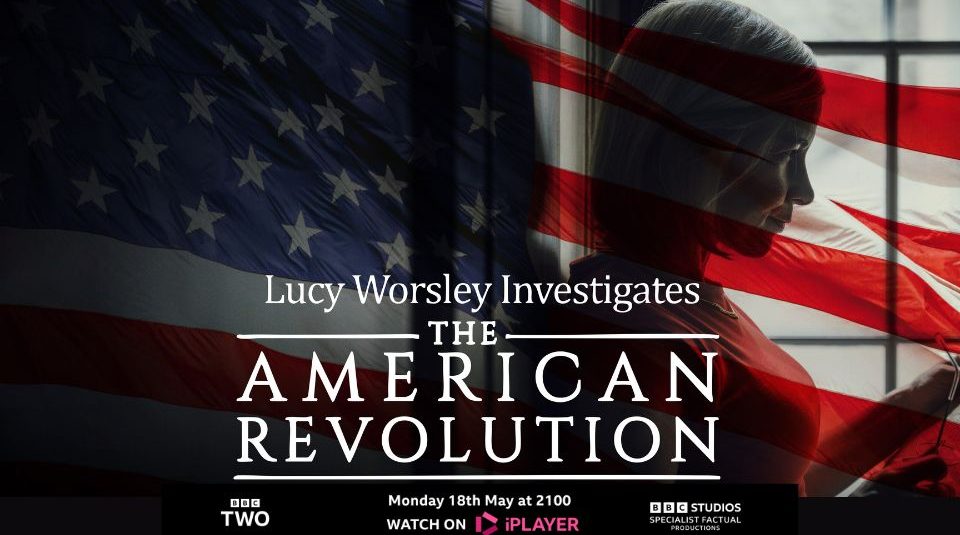
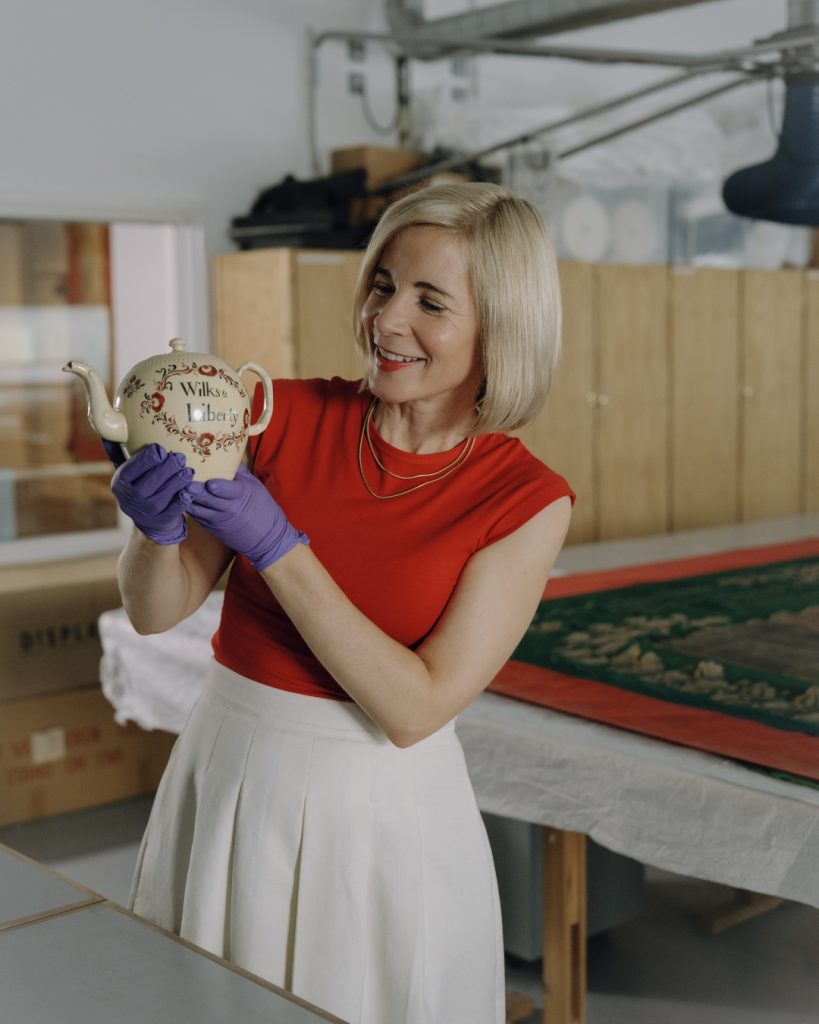
In the summer of 2025, People’s History Museum (PHM) welcomed historian and broadcaster Lucy Worsley to explore the museum as part of the research into her 2026 BBC series, ‘Lucy Worsley Investigates the American Revolution‘. The programme looks at the roots of the American Revolution on both sides of the Atlantic and, in so doing, shines a light on a fascinating and often overlooked figure in the story of liberty: John Wilkes (1725-1797).
PHM holds a remarkable collection of Wilkes related objects from portraits to medals, but it is the ceramics that are most striking. These everyday domestic objects offer a glimpse into how political ideas were shared and how political figures were celebrated in the 18th century.
In this blog we learn more from PHM’s Director Clare Barlow, who builds on her conversation with Lucy Worsley featured in the programme.
John Wilkes (1725-1797) was an 18th century radical MP and journalist who led one of the most successful campaigns for freedom of the press of all time. Edition 45 of Wilkes’s satirical pamphlet ‘The North Briton’, published in 1763, dared to criticise a royal speech. Wilkes was arrested. This sparked a tussle between Wilkes and authorities which lasted for over a decade. The authorities saw Wilkes as a troublemaker and repeatedly tried to convict him.
In 1764 Wilkes was successfully prosecuted for ‘seditious libel’ and fled to France. In his absence, he was declared an outlaw. Exile was expensive and his debts mounted. In 1768 he had little choice but to return to Britain, where he was elected MP for Middlesex, before being sent to prison for two years. His supporters gathered outside his prison on St George’s Fields, chanting “Wilkes and Liberty” but troops opened fire, leading to what became known as the St George’s Fields Massacre.
Parliament expelled Wilkes and organised a by-election, but Wilkes was again elected despite being in jail. He was expelled and re-elected twice more in 1769, winning 79% of the vote on his final attempt, but the authorities lost patience. They voided the result and appointed the runner-up William Luttrell. It was, however, a bruising affair for the Government and established Wilkes as a hero of democracy.
Wilkes and his supporters saw him as a hero of the free press and took his imprisonment as proof of royal tyranny. Their slogan ‘Wilkes And Liberty’ reverberated across the English-speaking world. While in jail, Wilkes was repeatedly elected as MP for Middlesex, even though he was denied the right to take up his seat in parliament on the grounds that he was an outlaw. His cause had a profound effect on American revolutionaries and the right of freedom of the press was drafted into the new American Constitution.
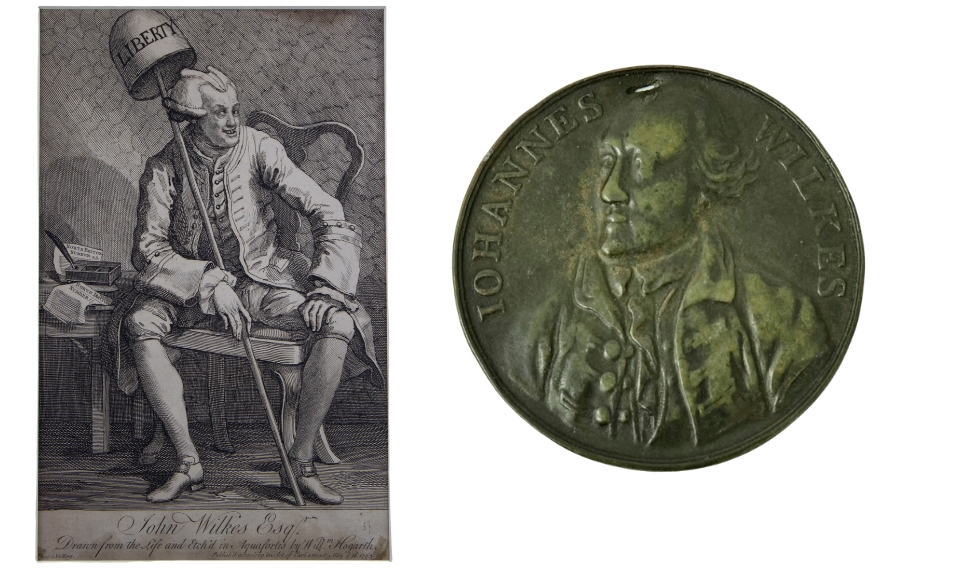
Wilkes might seem an unlikely figure to lead a pro-democracy movement. He was a member of the wealthy Hellfire Club and scandalised in society for separating from his wife and having many relationships with many women. The authorities failed to prosecute him for his political activities but successfully used the charge of seditious libel to convict him for publishing a pornographic poem, titled ‘An Essay on Woman’. People weren’t fooled. It was clear that King George III and his ministers hated Wilkes and wanted to convict him at all costs.
Wilkes’s fate became interwoven with debates about how much power the King should have, what a fair legal system looks like, whether people can elect anyone as an MP, and if there should be restrictions on what can be said in the press. The case of Wilkes became a flashpoint for debates over the nature of democracy.
Books and newspapers passed backwards and forwards between Britain and America at this time, and the story of Wilkes became well known in revolutionary circles. In 1769, the Committee of the Boston Sons of Liberty wrote to him, praising ‘the invincible resolution with which you have supported the cause of liberty, and of Mankind.’ An American correspondent went even further, telling him ‘the fate of Wilkes and America must stand or fall together.’ Benjamin Franklin, one of the Founding Fathers of the United States, lived in London between 1757 and 1777 and was less impressed, writing in 1768: ‘Mobs are patrolling the Streets at Noon Day, some Knocking all down that will not roar for Wilkes and Liberty.’
Regardless of their personal feelings about Wilkes and his supporters, it was impossible for the revolutionaries to ignore Wilkes’s impact. His case drew attention to the dangers of monarchical power and the importance of the freedom of the press – causes that the Americans shared. When Wilkes was imprisoned, Americans sent him gifts, and at political gatherings toasts were made to “Wilkes and Liberty” on both sides of the Atlantic. So great was his reputation that two towns in the USA are named after him: Wilkesboro, North Carolina, and Wilkes-Barres, Pennsylvania.
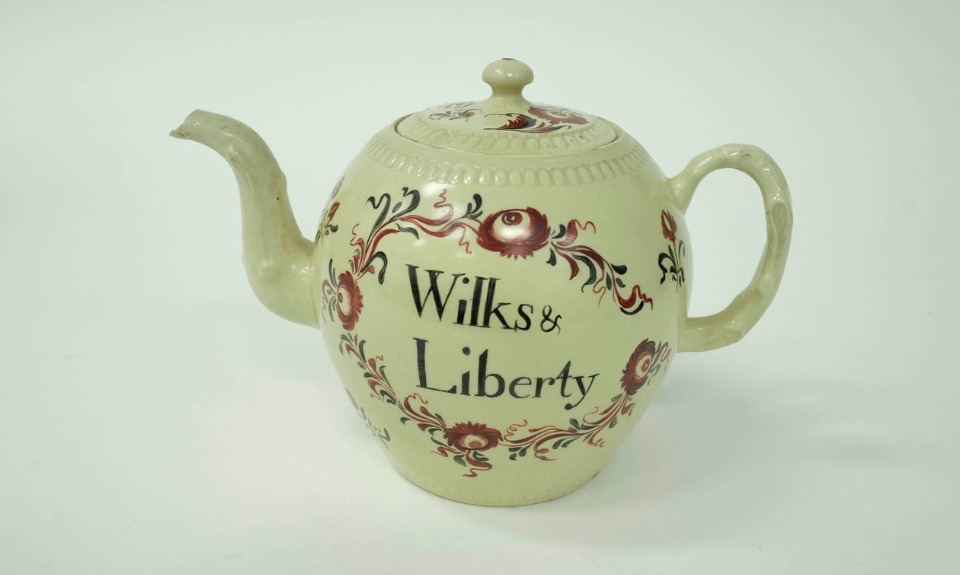
One of the striking things about Wilkes ‘merch’ is how widely available it was. Mugs, teapots, plates, punch bowls, and figurines were produced in British potteries in centres such as Leeds, Derby, and London. Most were simple ‘creamware’, a type of pottery introduced in Staffordshire in the 1750s as a homegrown affordable rival to expensive Chinese porcelain. Some, like the teapot in PHM’s collection, include the quirk of the misspelling ‘Wilks’, which could reflect the irregularities of 18th century spelling, or be a sign of the haste with which they were produced. There are, however, some extremely refined examples, including one by the Worcester Porcelain Factory which carried an almost hidden reference to Wilkes; a subtle ‘No. 45’ painted in gold at the base of its spout.
Britain wasn’t the only market for these kind of items; just as publications and ideas crossed the Atlantic, so too did ceramics, and there are many examples of Wilkes commemorative pottery in American collections.
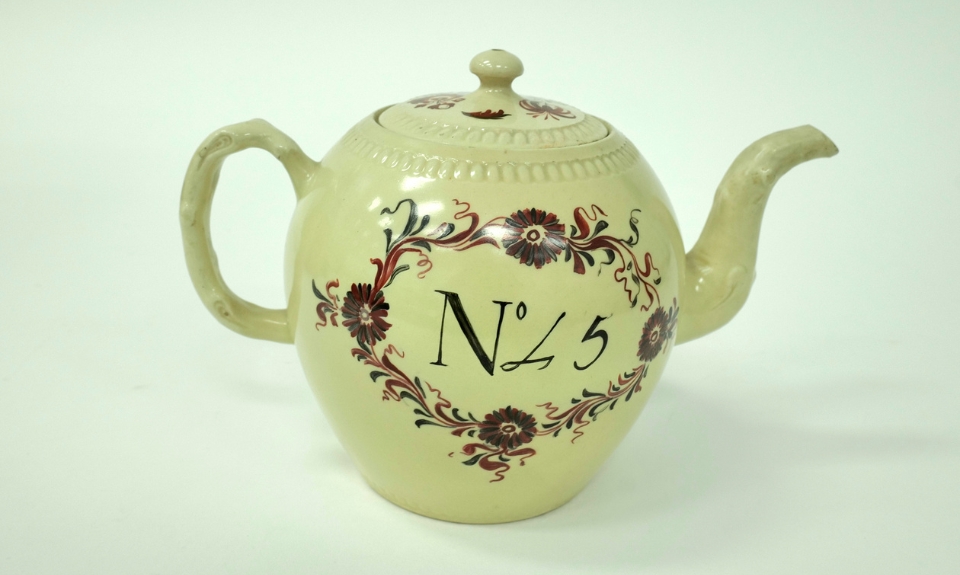
Number 45 refers to edition 45 of Wilkes’ pamphlet ‘The North Britain’ in which he criticised a royal speech, kicking off the whole row with King George III. However, Wilkes’ choice of this edition number wasn’t accidental. When Wilkes published his pamphlet, the number 45 was also associated with what was seen as a specific set of threats to Britain: Catholicism, foreign influence, and tyrannical monarchy. The roots of these threats lay in bloody uprisings at the start of the 18th century, led by people who supported the deposed Catholic King James II and VII and his heirs, rather than the new Protestant Hanoverian regime. The Hanoverians had been invited to the throne by parliament, in an agreement that placed limits on royal power. King James II and VII’s followers were known as Jacobites (deriving from ‘Jacobus’, the Latin version of James) and led a major rebellion in 1745. Bonnie Prince Charlie landed in Scotland, captured Edinburgh, and invaded England, getting as far as Derby.
When George III became King in 1760, many people were worried that these threats hadn’t gone away. Suspicion swirled around one of George III’s closest ministers Lord Bute, who was Scottish and rumoured to be secretly Catholic. Even worse, Wilkes and many others worried that under Bute’s influence, George III seemed to be adopting a more European style of absolute monarchy – rather than sharing power with parliament as had been agreed. In their eyes, King George III risked becoming as much of a threat to Britain as King James and the Jacobites.
Wilkes chose issue 45 of ‘The North Briton’ to criticise the King to remind people of the 1745 rebellion and the threat of a tyrannical monarch. Amongst Wilkes’ supporters, the number 45 ceased to be associated with the Jacobites and became a broader symbol of freedom from tyranny.
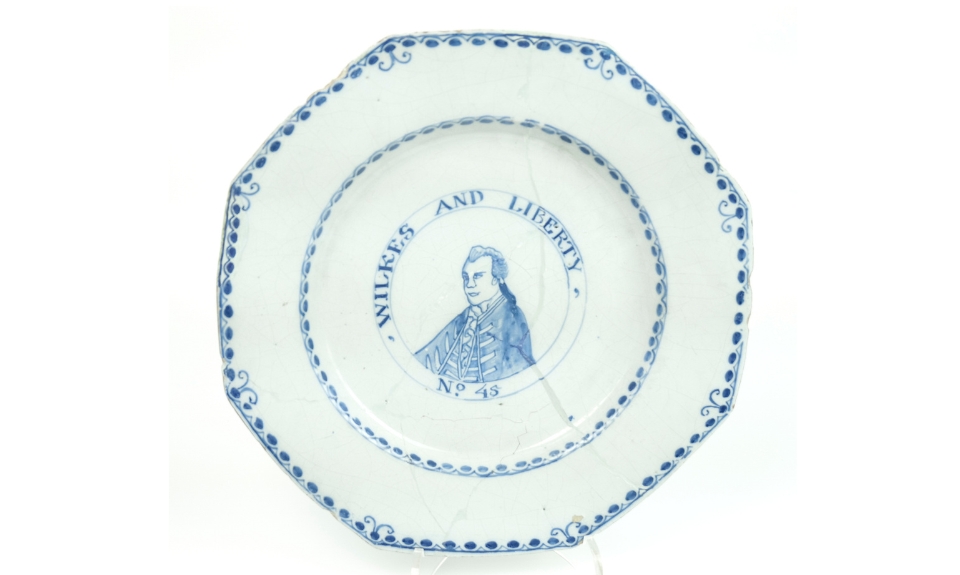
Wilkes was practically unique in terms of the scale of his support and the length of time in which he successfully remained in the public eye. From the early attempts to prosecuted him in 1763 and 1764, to the three attempts to elect him to parliament in 1768 and 1769, Wilkes remained in the news. On his release from prison, he was appointed a Sherrif in London and was elected Lord Mayor in 1774. Each twist in his story provided fresh opportunities for self-promotion and merchandise.
But perhaps more importantly, Wilkes became a symbol. The specifics of his original criticisms of King George III were less important than the principles of democracy, impartial law, and freedom of the press summed up by the slogan ‘Wilkes and Liberty’. Wilkes and his supporters were ahead of their time in recognising the power of a simple, recognisable brand to communicate their ideas.
Wilkes’s story is bound up with a very specific set of fears about the nature of government in the mid to late 18th century, but it raises questions that are still relevant today. King George III and his ministers went to extraordinary lengths to prosecute Wilkes, and the injustice of this led many people to support him. Wilkes’ success in appealing to public opinion shows the power of the people, even in the 18th century. No matter how powerful the King was, he couldn’t change the minds of the electorate.
Watch the first episode of ‘Lucy Worsley Investigates: The American Revolution‘ which first aired on BBC Two at 9.00pm on Monday 18 May 2026. The full series will be able to stream on iPlayer the same day.
Explore the museum’s collection of Wilkes ‘merch’ on display in Gallery One.
Are you more independent or community focused? Experimental or measured? Prefer work or play?
Take our quick quiz to find out which radical you are!