For International Women’s Day we caught up with PhD student Amy Todd, who discusses her research on the Women’s Liberation Movement in Britain (WLM) from 1968 to 1988, and related material held in the Labour History Archive & Study Centre at PHM.
The British Women’s Liberation Movement (WLM) is usually credited with emerging from 1968 through a series of political events. WLM activists Beatrix Campbell and Val Charlton identify three pivotal moments: the fight of the headscarf revolutionaries in Hull, led by Lil Bilocca, whose campaign for safety at sea reforms saw her ‘confront the Prime Minister and force trawler owners, unions, and government to act’; the 1968 strike at the Ford factory in Dagenham by women sewing machinists, which directly influenced the passing of the Equal Pay Act of 1970; and the formation of the National Joint Action Campaign for Women’s Equal Rights in 1969 (see campaign papers – ref: CP/CENT/WOM/5/9).
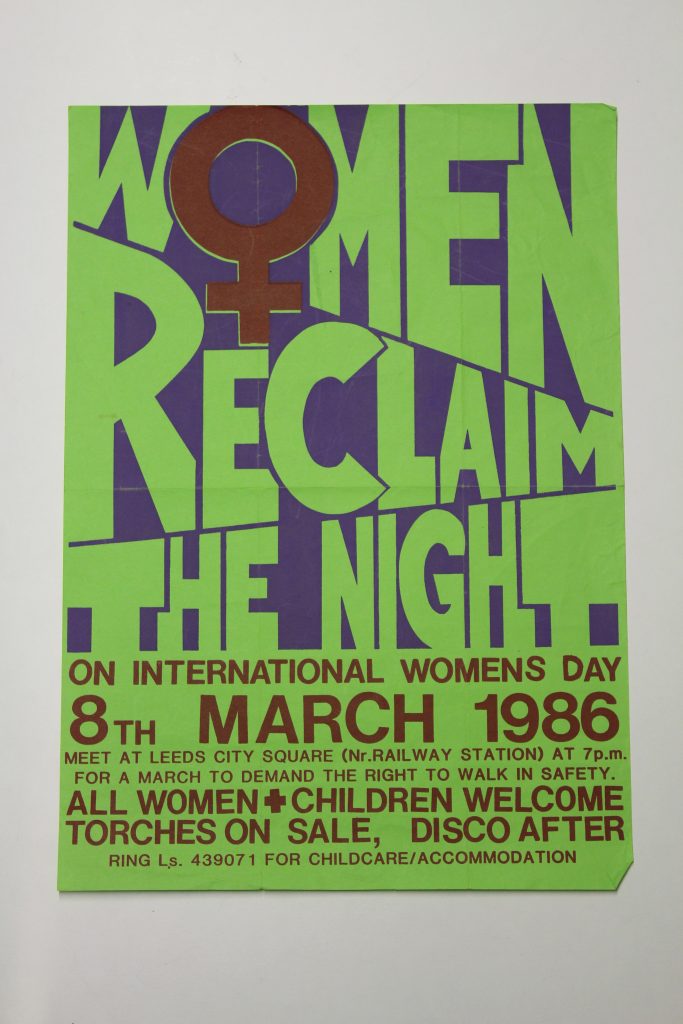
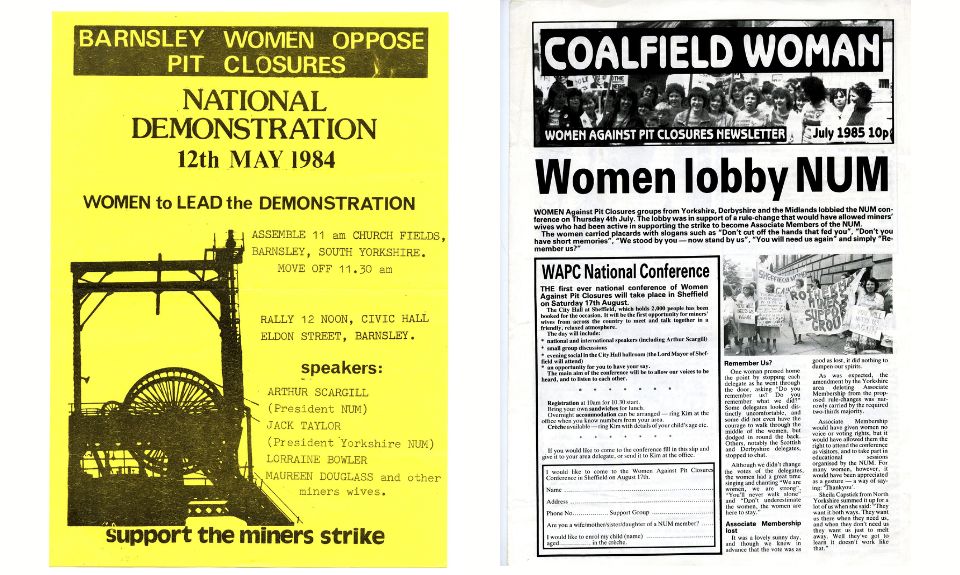
Emerging in the wake of radical political upheavals – student protests, anti-colonial struggles, and labour militancy – the WLM brought together diverse feminist voices; radical, socialist, liberal, lesbian, and Black and Asian feminists. Annual National Women’s Liberation Conferences, starting in 1970, led to demands for equal pay, reproductive rights, accessible childcare, freedom from sexual and domestic violence, and the fight against racial and colonial oppression, and the right to a self-defined sexuality. Revolutionary figures such as Sheila Rowbotham, Anna Davin, Sally Alexander, Olive Morris, Gerlin Bean, and those of the Brixton Black Women’s Group helped anchor the movement in both grassroots action and intellectual life. Becoming defining moments of feminist direct action were campaigns like the Reclaim the Night marches, the National Abortion Campaign (see papers of Jean Styles and Maggie Bowden, Communist Party of Great Britain’s (CPGB) Women’s Officers of the period – ref: CP/CENT/WOM/1/4-6), activism around the Miss World protests in 1970, the setting up of women’s refuges by activist Erin Pizzey and others, the Greenham Common Women’s Peace Camp, and the actions of the Women Against Pit Closures (WAPC) during the Miners’ Strike of 1984 to 1985 (see personal papers of Hilary Wainwright – ref: B/394/WAIN).
Feminists within the WLM started to meet in small, non-hierarchical consciousness-raising groups in their local areas, as inspired by a similar way of working in the US. Women would meet and discuss their thoughts, feelings, lives, and experiences both at work and at home, and also in relationships, society, and family. Groups in London such as Peckham Rye and Finsbury Park then started to work together to create the London Women’s Liberation Workshop, which then collectively produced publications such as the magazine ‘Shrew’ (see editions within Feminist Webs collection).
One of the main ways feminists came together was through the National Women’s Liberation Conferences, held annually from 1970 to 1987. The first, in February 1970 at Ruskin College, Oxford, was organised by WLM activists Sheila Rowbotham, Sally Alexander, Arielle Aberson, and Roberta Hunter-Henderson. It drew around 500 women; students, factory workers, teachers, mothers, and activists – from across the UK. Sessions covered childcare, equal pay, reproductive rights, and the portrayal of women in the media, combining structured debates with informal workshops. Men were on hand to staff the crèche.
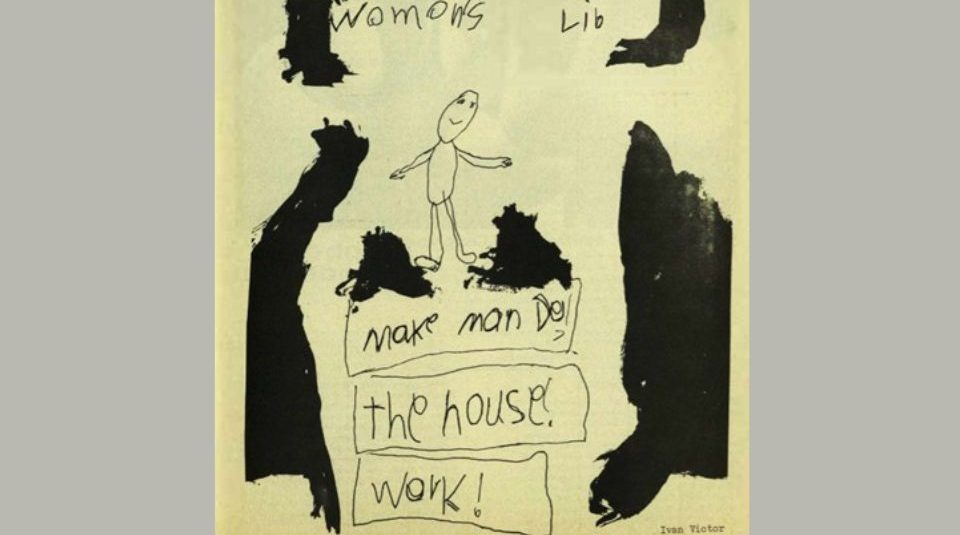
Print culture was a vital lifeline for the movement, reflecting its diversity and decentralised energy. Alongside national feminist magazines like ‘Spare Rib’, hundreds of local newsletters, pamphlets, and zines were produced by women’s groups, trade union women’s committees, Black and Asian feminist collectives, lesbian organisations, and campaign networks. Titles were as varied as the movement itself: ‘Scarlet Women’ magazine, based in the North East, explored socialist feminist politics; ‘Red Rag’ magazine was another socialist feminist publication which centred on activity in London; ‘Socialist Woman’ was the journal of the International Marxist’s Group; ‘Outwrite!’ magazine in London offered a platform for lesbian feminist news, debate, and culture; ‘Mukti’ magazine amplified the voices of South Asian women in Britain; and ‘Feminist Review’ magazine offered an academic output for the movement. Many of the publications were printed on kitchen tables or in collectively run printshops like See Red Women’s Workshop, and carried a mix of news, political analysis, poetry, artwork, and practical advice. These publications allowed ideas to travel between groups, gave space to marginalised voices within the movement, and built a shared sense of identity while preserving the differences and debates that defined the WLM (many of these publications are accessible in the archive).
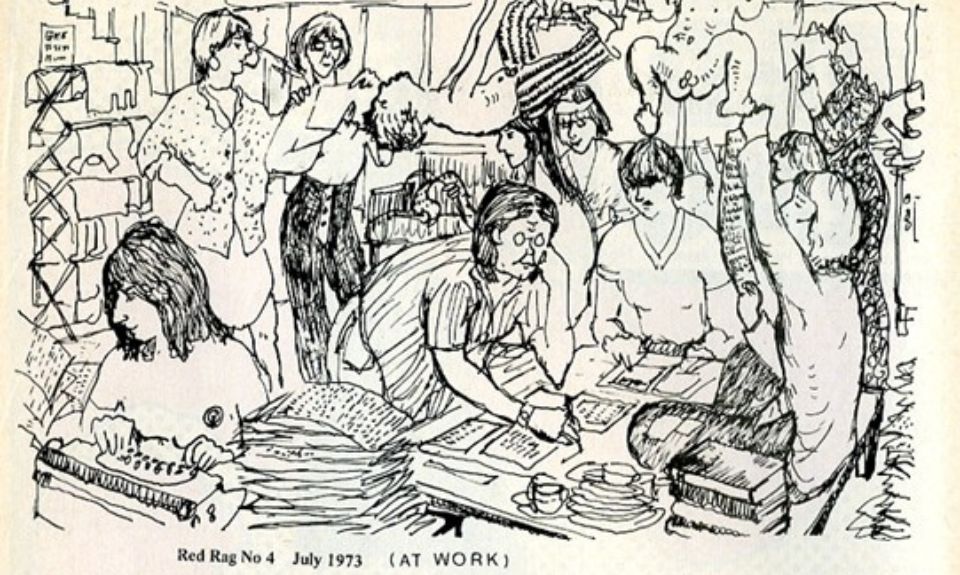
The relationship between the Women’s Liberation Movement (WLM) and the British left was complicated. Many socialist feminists worked within the Labour Party and the Communist Party of Great Britain (CPGB), and others were active in rank and file, grassroots, libertarian, and Trotskyist movements such as the International Socialists (later the Socialist Workers Party), the International Marxists’ Group, or Big Flame, pushing for women’s rights to be central to socialist politics. Within the Labour Party, MPs such as Barbara Castle, Jo Richardson, and Judith Hart (see personal papers of Judith Hart – ref: LP/HART) fought for equal pay, maternity leave, and abortion rights – sometimes through official channels like the Labour Women’s Conference (the Labour Party’s archives are held in the museum’s archive) and sometimes via grassroots campaigns. Within the CPGB, the National Women’s Advisory Council and Women’s Officers worked within and against the party’s structures for reform, to better meet the needs of women (see material from The Woman’s Department of the CPGB – ref: CP/CENT/WOM).
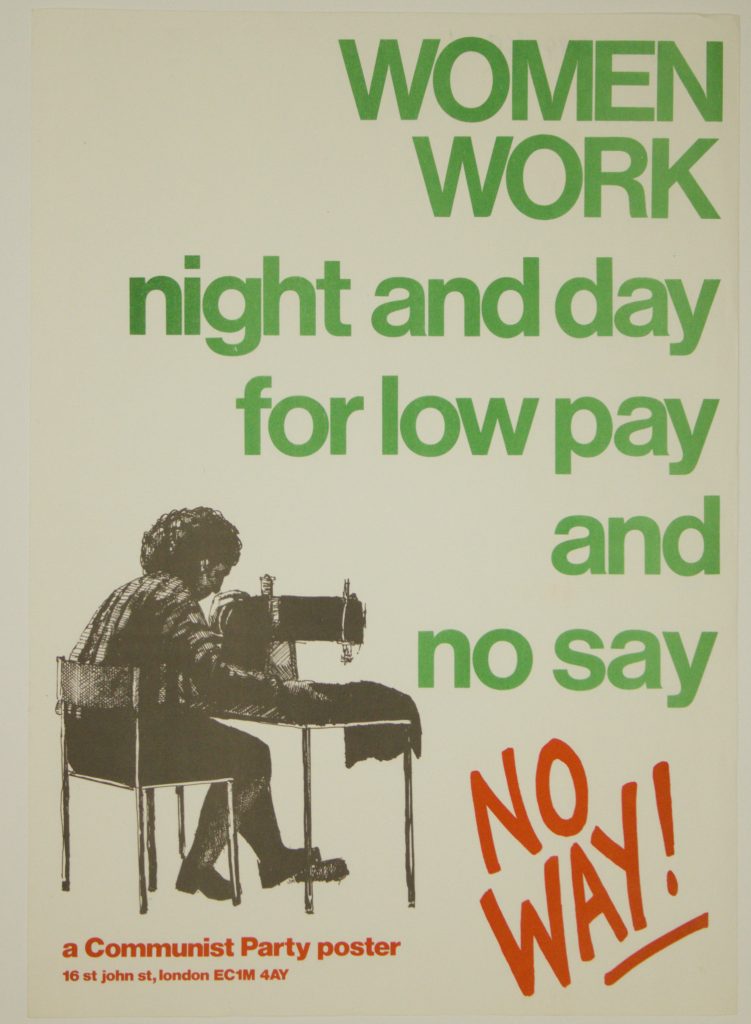
At the grassroots level, WLM activists built strong connections with women trade unionists. The Grunwick Strike (1976-1978), led largely by Asian women workers, became a touchstone for solidarity, drawing thousands of trade unionists – though not without tensions over whose struggles were prioritised. Many male trade unionists and left activists regarded feminism as a distraction from class struggle, defining their role as defending the male breadwinner and often failing to recognise women as workers in their own right – or as the primary wage earners that many were. From a feminist perspective, the very definitions and boundaries of what ‘work’ meant became a site of contest, with socialist feminists campaigning for equality not just in the workplace, but in the home.
This was documented and explored in the pages of ‘Red Rag’ magazine (ref: CP/CENT/WOM/5/8), which was created at first by CPGB women as a journal for leftwing women in the WLM, but quickly became a publishing platform which included diverse political actors and influences from across the broad spectrum of the British left. On paper, trade unions and the Trades Union Congress (TUC) sometimes appeared to adopt policies in line with WLM demands. But in practice, the attitudes of individual members, and the structures and cultures of their organisations, often remained oppressive and discriminatory toward women. As authors Anna Coote and Beatrix Campbell note, at the 1981 TUC Women’s Conference a resolution was passed recognising “that the unequal division of work in the home is one of the main obstacles to equal pay and employment opportunities, and to the full participation of women in the trade union movement.” The conference called on the General Council and the Women’s Advisory Committee to launch a campaign to raise consciousness among male trade unionists about sharing housework and childcare. Later that year, the TUC passed another resolution recognising that the “outdated concept of the family wage” was a basic cause of rising unemployment among women. These policies signalled progress, but the gap between such resolutions and everyday union practice remained a source of frustration and struggle for many women activists.
The WLM’s impact has been as much cultural and academic as it has been political. It didn’t just influence existing disciplines – it created entirely new ones. Women’s studies, feminist philosophy, feminist economics, and feminist legal theory emerged directly from WLM’s challenges to the male-dominated canon in history, literature, sociology, and beyond. Activists and scholars developed original analytical tools, like intersectionality, socialist feminism, and consciousness-raising – not only to reinterpret the past but to map intersecting forms of oppression around migration, race, sexuality, gender, and class. In Britain, the movement transformed the left, pushing trade unions and socialist organisations to take gender issues seriously, and pioneered grassroots, prefigurative ways of working, including non-hierarchical decision making, collective organising, and local women’s centres becoming templates for future activism.
Today, the legacy of the WLM can be traced in intersectional feminist movements, in how politics and media discuss gender and sexuality, and in activist networks that link struggles for economic justice, anti-racism, LGBTQIA+ rights, climate action, and disability justice. From grassroots mutual aid groups to global campaigns like #MeToo, the WLM’s insistence that ‘the personal is political’ carries the radical potential to liberate not just women, but us all.
The archive holds an extraordinary range of WLM materials from between 1968 and 1989. Highlights include:
All the above information and more can be found in the Labour History Archive & Study Centre at People’s History Museum. See the British Women’s Liberation Movement research guide on PHM’s website.
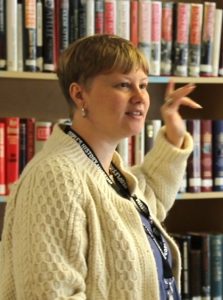 Amy Todd is working at PHM helping researchers visiting the archive to explore its incredible collection of political material whilst studying for a PhD at The University of Manchester.
Her research focuses on the Women’s Liberation Movement in Britain (1968-1988) and the magazines that were created by women involved in this political movement.
Discover PHM’s handy research guides to learn more about other archive collections. The archive is open to researchers every Wednesday to Friday, 10.00am to 4.00pm, lunchtime closure 12.30pm to 1.30pm.
Read a previous blog by Amy Todd in which she explores the history of the socialist feminism movement, illustrated by examples of feminist print culture from the museum’s rich collection.
Join Amy as she hosts a screening and Q&A of ‘Iron Ladies’ on Saturday 28 March, a film dedicated to the iron-willed women who maintained the 1984 to 1985 Miners’ Strike as they fought for the future of their communities. This is part of the accompanying events programme to the On The Line: 100 years of strikes & solidarity exhibition (21 March to 1 November 2026) at PHM, to mark the centenary of the 1926 General Strike and examine its legacy.
Create textile responses at The Fabric of Protest workshop on Saturday 21 March inspired by women-led strikes and related posters featured in the On The Line exhibition.
Are you more independent or community focused? Experimental or measured? Prefer work or play?
Take our quick quiz to find out which radical you are!