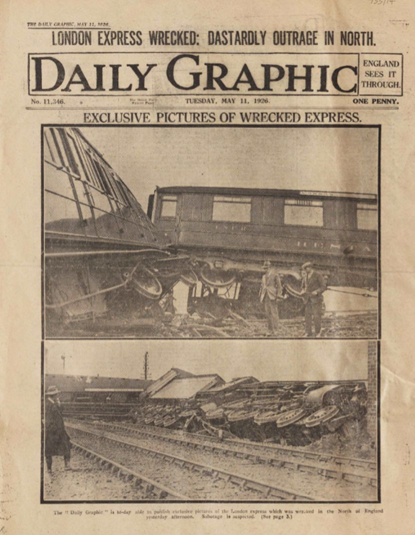
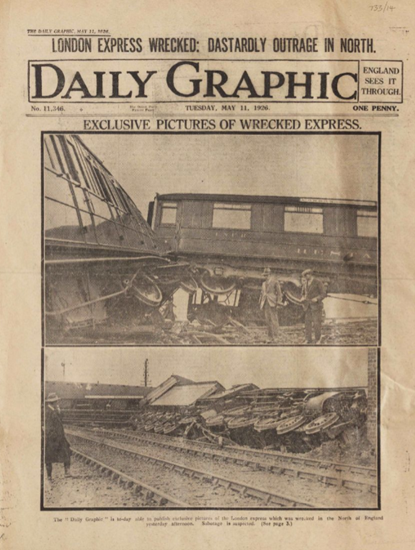
100 years ago, at the height of the General Strike, the Flying Scotsman came off the tracks in Cramlington, Northumberland. But who derailed the most famous train in the country, and why? In the first of a series of three blogs exploring the 1926 General Strike, we caught up with Dr Dan Edmonds, PHM and Royal Holloway University of London researcher to shine a light on the story behind the headlines.
As part of this series we’ll also hear about Marion Phillips and the women who sustained the miners’ lockout, and Shapurji Saklatvala, an MP once considered the most dangerous man in Britain, who was imprisoned during the 1926 General Strike.
On 10 May 1926 the Flying Scotsman train came off the tracks in Cramlington, Northumberland. The train, run by student volunteers, had been going slow at the time and fortunately only one person was injured. Some of the passengers emerged from the overturned train to see that a rail had been pulled up and a crowd of young people were running away.
Following the derailment of the train, the government quickly launched a manhunt to find the perpetrators. Eight miners were arrested a month later, including[1] 26 year old Bill Muckle. In court the accused said that they were being made an example of; that over 30 people had taken part, including the witnesses. They insisted they had thought it would be a coal train coming along the tracks, and that they had warned the driver with enough time to stop.[2] All eight were found guilty and given sentences of between four and eight years, to be served 300 miles away in Maidstone. They were housed alongside murderers in squalid conditions, their families unable to afford the train to come and see them.
Why take such a risk when the penalty was so heavy? The striking miners had been at a lodge meeting earlier in the day, and had been told to ‘stop everything on wheels’ by a local union official. Bill Muckle, one of those imprisoned, wrote about the incident in his autobiography ‘No Regrets’. He had been working in the pits since he was 13, and had originally had to purchase all his own equipment, including candles. He had bitter memories of the strike of 1921 being defeated, of having to beg, poach, and go to soup kitchens to get by. He had experienced desperate poverty and was determined to see the General Strike win:
“We were miners content with what we had, only if they had let us alone; but they came for a forty percent cut in our wages and that put our backs up. The only thing I was sorry about was that the train we tipped was ‘The Flying Scotsman’ with 281 people on board. I say now we were thankful there was nobody killed…. but when you come to think again it was a General Strike and they were blacklegs running the trains. Any way the trains should not have been running.”[3]
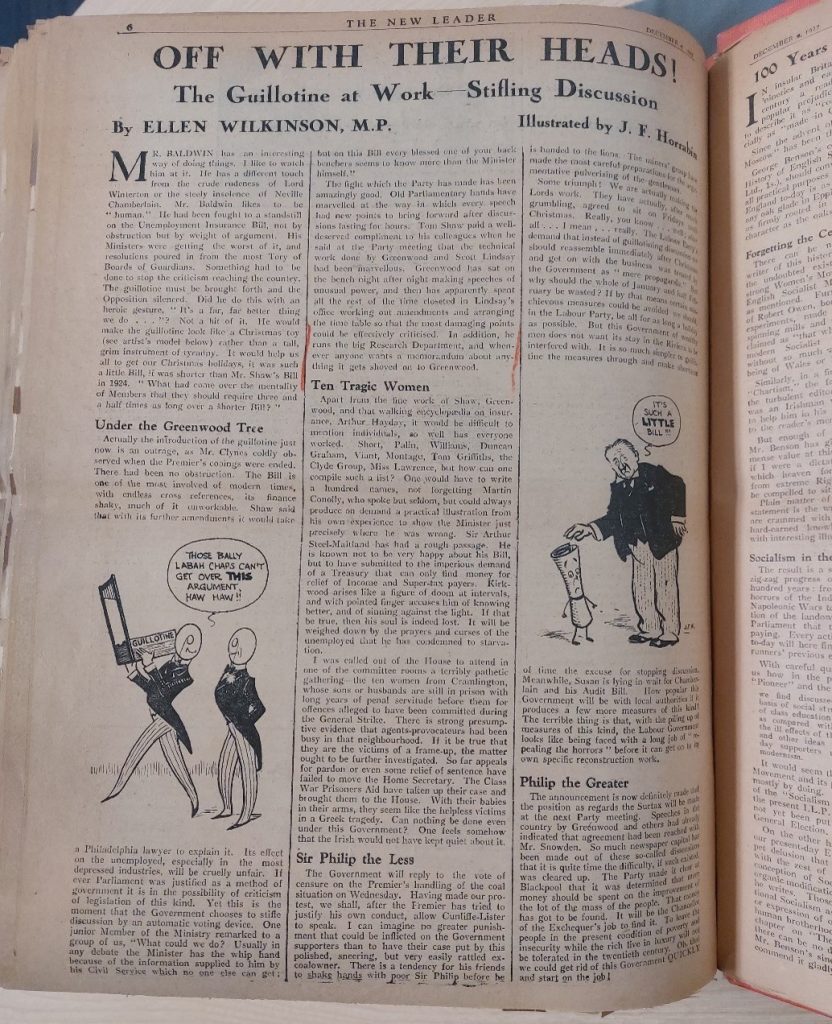
Images of the train lying twisted on its side were splashed across the front pages of newspapers in the days that followed the derailment; the accompanying coverage seemed to many to show the violent threat that revolutionary strikers posed to the nation. Today these images are still found in textbooks and popular commemorations on the 1926 General Strike. It’s not hard to see why; they are visually arresting and were commonly printed at the time. However, the story of those who derailed the train, why they did it, and what happened to them is rarely shown.
The International Class War Prisoners Aid society (ICWPA) took an immediate interest in the case. ICWPA was an international campaign that had been launched in the UK by the Communist Party of Great Britain (CPGB) in 1925. The society financially supported the miners’ families and paid for their visits to Maidstone. Visits were only 30 minutes – the families asked for an hour given the cost of the journey making these rare occasions. They were granted an extra 10 minutes.[4] Members of the ICWPA such as Sarah Lovell would visit the prisoners and their families, passing information between them and the outside world and helping to raise their spirits.
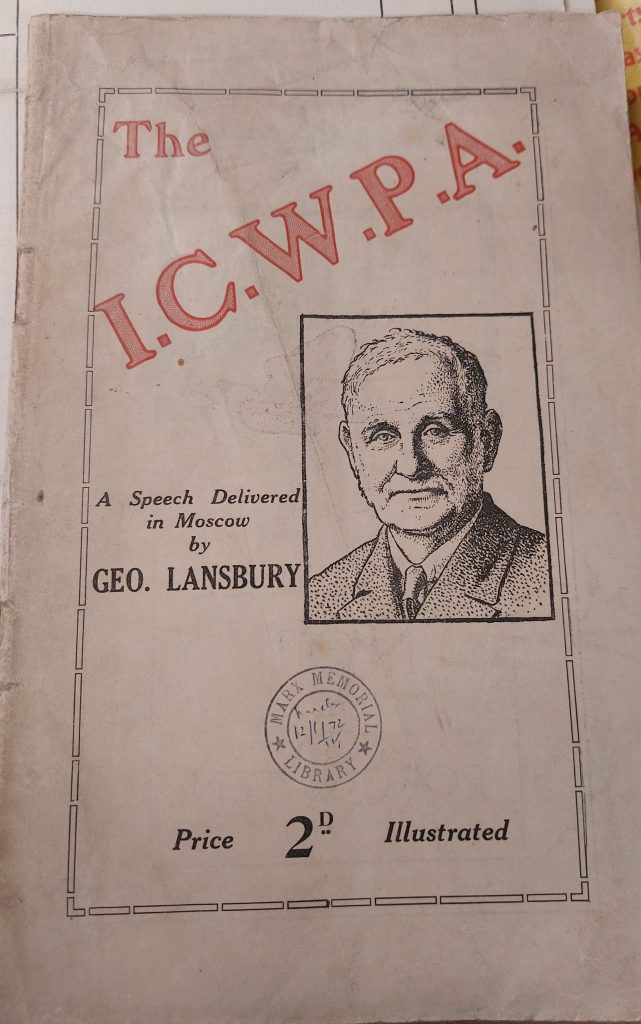
(The pamphlet pictured above is currently on display in the exhibition On The Line: 100 years of strikes & solidarity.)
The ICWPA also worked with the miners’ wives and mothers to lobby on their behalf, calling for their early release. They enlisted valuable allies such as Ellen Wilkinson MP to support the cause.
This turned into a sizeable campaign. Labour movement newspapers and homemade ICWPA pamphlets regularly alleged a frame up and encouraged readers to take action. Over 120 trade union branches and trades councils sent letters to the Home Secretary calling for their release.[5]
Large demonstrations were held in London, and groups of ICWPA members would burst out in front of the Home Secretary wearing sashes with their demands written on them. Some of the miners’ families were uncomfortable with this. Robert Harbottle’s mother wrote a letter to the Home Secretary in 1928 denying any accusation of being a ‘red’ and asserting her and her son’s Christian values.
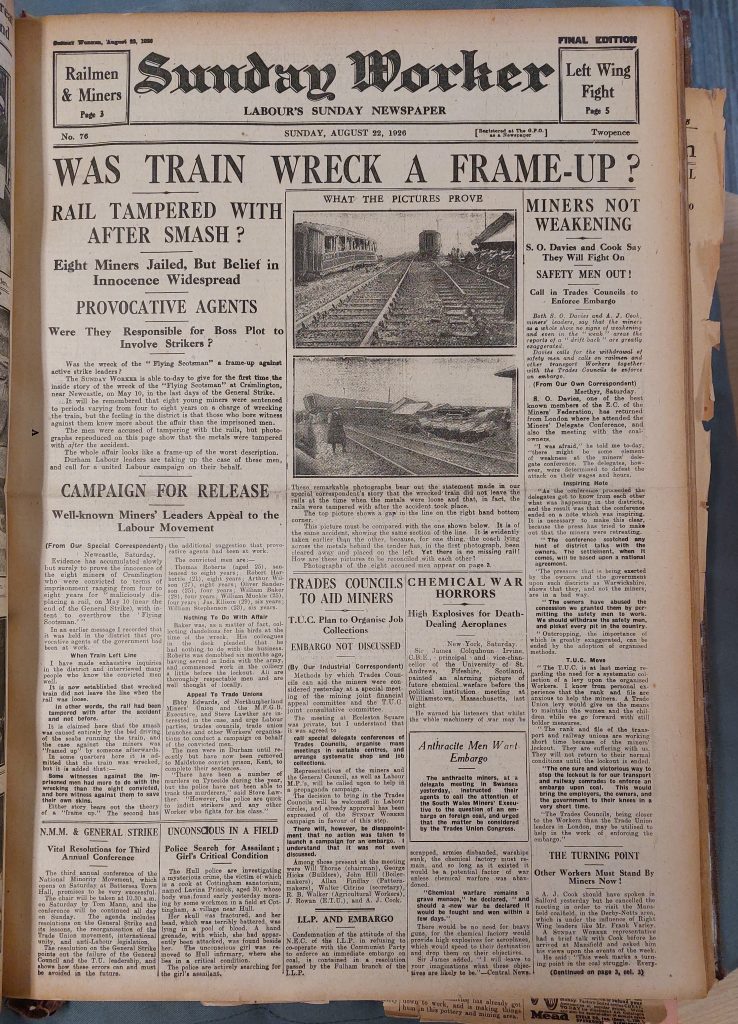
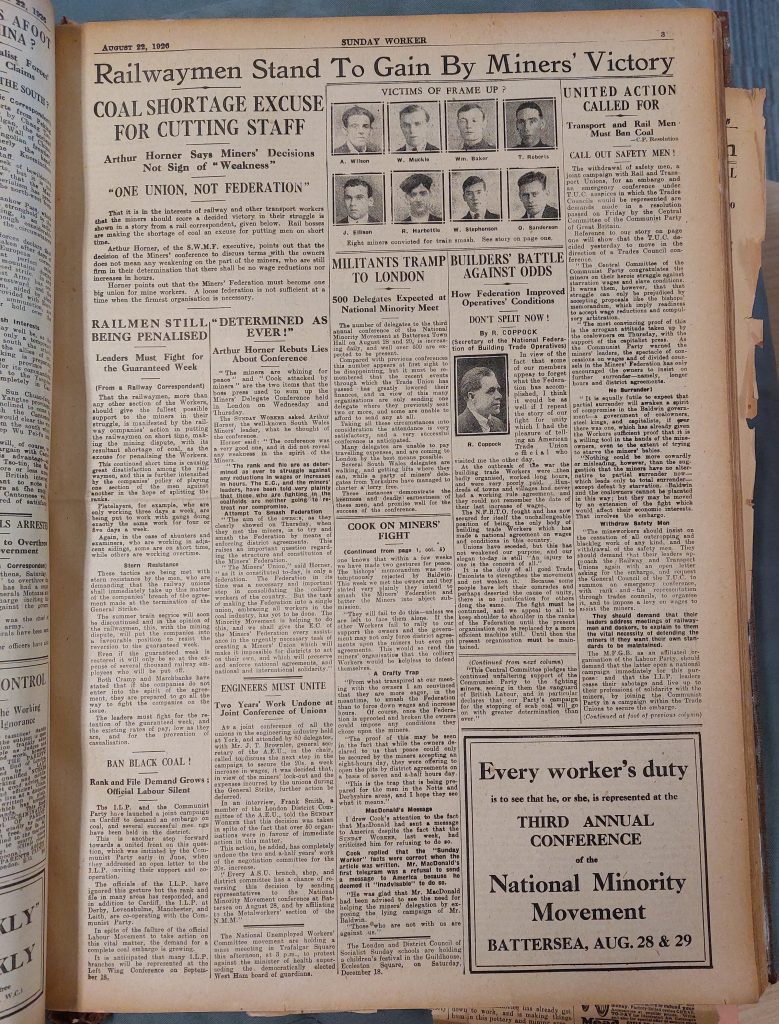
The appeals bore success. All the miners received reduced sentences and were released by December 1929. They were welcomed home with large rallies and celebrations. The Cramlington Eight remained well known in the area, and interest has recently resurged after a popular play, ‘The Cramlington Train Wreckers‘, toured the region.
A BBC documentary about the derailment was made in 1969. Harbottle would publicly express regret for his actions, and said he just wanted to lead a quiet life now. Muckle joined the CPGB having received such unshakable support, becoming one of the thousands of miners who swelled the ranks of the organisation in 1926. He always claimed that his actions were justified because of the poverty he and his community faced:
“We were not violent men, and had the middle class ‘plus four’ train crews and platelayers not sought to break the strike, the incident would never have occurred. Our aim was to stop blackleg coal trains only, and for this we have no regrets. We were on starvation wages and fighting to preserve ourselves and our families from further degradation”.[6]
The story of the eight Cramlington miners tells us a lot of about how economic circumstances and ideologies can shape the actions of workers campaigning for their rights. Debates about the merit of illegal actions finds historical echoes in struggles for the right to vote, both among the Chartists and in the women’s suffrage movement. The government’s firm response to ‘militants’ similarly has a number of historic parallels which could be explored in the classroom. Fortunately for teachers today, there is a wealth of materials, including autobiographies, television programmes, and personal letters which can help students gain an insight into the mindset of those young working class men who took up a rail a century ago.
 Dr Dan Edmonds is a Royal Holloway University of London (RHUL) researcher working on an Arts and Humanities Research Council funded project, Inclusive Histories. Dan is researching campaigns and activism using the collections of People’s History Museum and the Working Class Movement Library, with learning resources and case studies being developed that can be used to teach a more inclusive British political history GCSE that centres marginalised voices.
Book an appointment to discover more of the collection with the Archive Team via archive@phm.org.uk. Check out the 1926 General Strike archive guide.
Visit the museum’s headline exhibition for 2026, On The Line: 100 years of strikes & solidarity and journey through a century of struggles and stories of strength. On show until 2 November.
Explore strikes and solidarity further through the On The Line exhibition’s accompanying events programme.
Stay tuned for the next two blogs in this series exploring the 1926 General Strike further.
Sign up to our e-newsletter and be the first to hear the latest from PHM.
Subscribe to @apeopleshistory Substack – sharing stories of struggles for rights and representation, with a particular focus on the History GCSE module, Britain: Power and the People c1170 to the present day.
[1] Margaret Hutcherson, Let No Wheels Turn: The wrecking of the Flying Scotsman, 1926 (TUPS Books, 2006), pp.11-12
[2] William Muckle, No Regrets (Peoples Publications,1981) pp. 35-6
[3] Muckle, No Regrets, p. 37
[4] HO 144/10671. 495425/23 ‘Minutes to Head Office’, November 26th, 1927
[5] HO 144/10671. 495425 ‘Unimportant sub-no’s destroyed &c.’
[6] William Muckle, ‘Cramlington’, Labour Monthly (April, 1976), pp.166-171.
Are you more independent or community focused? Experimental or measured? Prefer work or play?
Take our quick quiz to find out which radical you are!