Marking 100 years since the 1926 General Strike, our headline exhibition for 2026 On The Line: 100 years of strikes & solidarity journeys through a century of struggles and stories of strength.
In this blog we caught up with the exhibition’s lead curator, PHM Exhibitions Officer Mark Wilson as he explores the vibrant visual culture that has grown around strike action, ahead of guided tour on the subject. Discover the artists, poster collectives, and radical printshops involved, and the creative propaganda they produced.
Visual culture has always been at the heart of the labour movement, from brightly painted flags and banners to a wealth of posters, t-shirts, and art.
The artist’s role has been integral in building a sense of community and giving a voice to marginalised workers. Posters and artworks produced by trade unions and their supporters have provided a vehicle to share the message behind a strike, and challenge unsympathetic media coverage.
Throughout the exhibition research process for On The Line: 100 years of strikes & solidarity, the strength of visual material became increasingly apparent. The emotive cartoons and illustrations, the powerful campaign posters, and the artworks created to document and commemorate workers’ struggles. They demonstrate the enduring role of art and design in communicating collective experiences of resistance and solidarity.
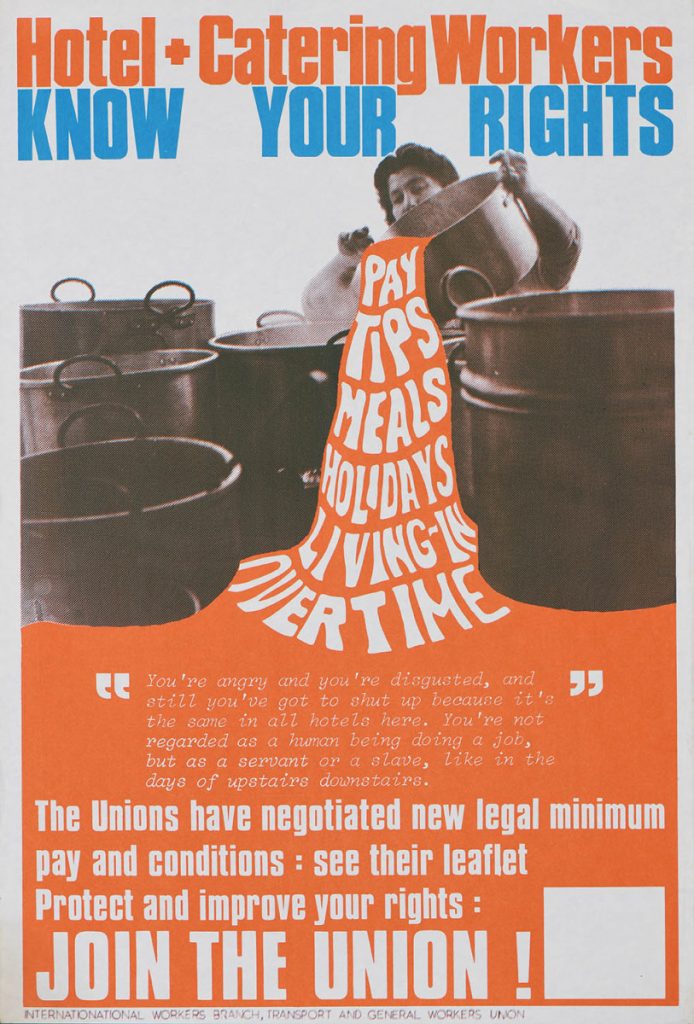
Banners have been a visible presence at strikes and demonstrations since the beginning of the trade union movement. In the movement’s early years however, other forms of visual material were more limited. Early trade union posters were usually text based, with little embellishment, and were often produced by local printers using wood type letterpress to create bold headlines and slogans.
By the 1950s, posters had become increasingly visual, with unions employing artists to design more striking and expressive campaign material. One of the most important figures in pushing this change was artist Ken Sprague, who established the design agency Mountain and Molehill with Ray Bernard. The company produced material for every major union during the 1960s and 1970s. They brought a fresh approach and wider visibility to trade union publicity, drawing on techniques from modern advertising.
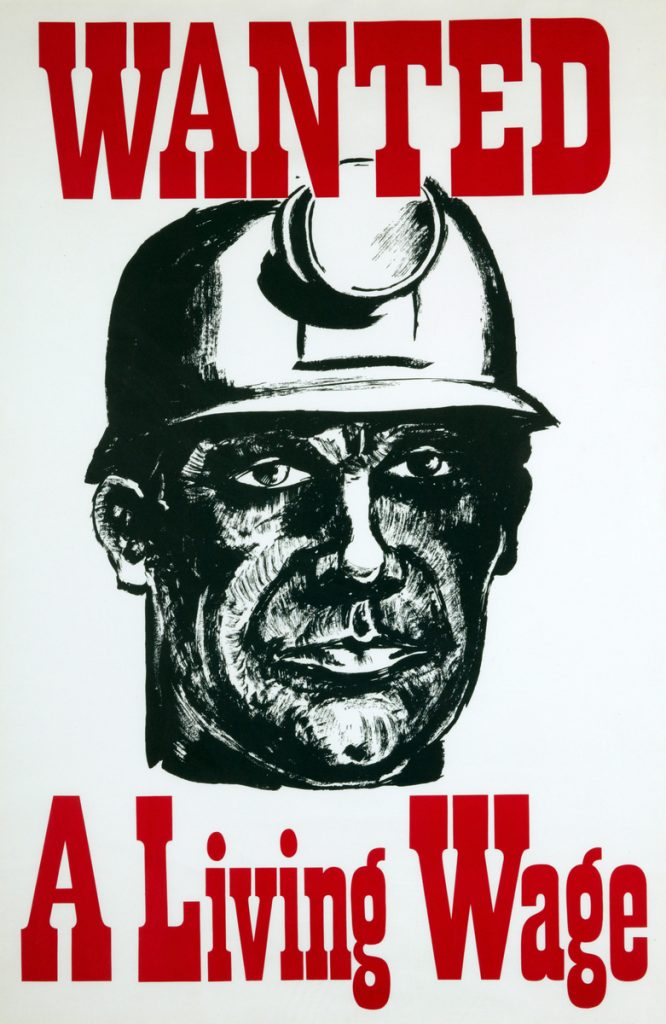
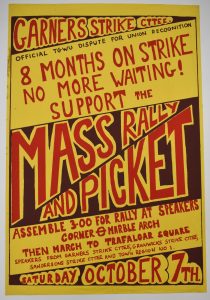
Posters also became more prominent in public protest; no longer simply stuck to walls, they were carried at demonstrations and displayed on picket lines. During the Miners’ Strike of 1972, posters like the one pictured below were carried by hundreds of people marching in support of the strike. As photographs from this period show, protests were often a sea of posters, placards, and banners.
The late 1960s saw an explosion in the popularity of the poster, driven by a growing counterculture. Printing had also become increasingly accessible with the rise of screen printing and cheap reproduction methods.
1968 is often seen as one of the defining years of the 20th century, a turbulent time of social and political change across the world. The escalation of industrial action, a growing resistance to international wars, and an increasingly politicised student body saw the emergence of a mass leftwing social movement.
In May 1968, France was swept by mass protests, strike action, and civil unrest. Students joined with trade unions in a nationwide general strike. Posters played a crucial role in communicating the movement’s demands; they were seen as ‘weapons in the service of the struggle’. Students and artists occupied art school printmaking studios, turning them into spaces for rapid poster production. Perhaps the most famous of these was the Atelier Populaire at the Sorbonne University’s École des Beaux Arts, which inspired radical printshops everywhere.
That same year, the Poster Workshop emerged from a basement in Camden Town, London. The artist led space was at the heart of the activist community, and they produced screen printed posters for a wide range of groups and causes, including strikes, civil rights campaigns, international liberation movements, and tenants’ associations. Running on a non-profit basis, the workshop asked groups to pay only what they could afford.
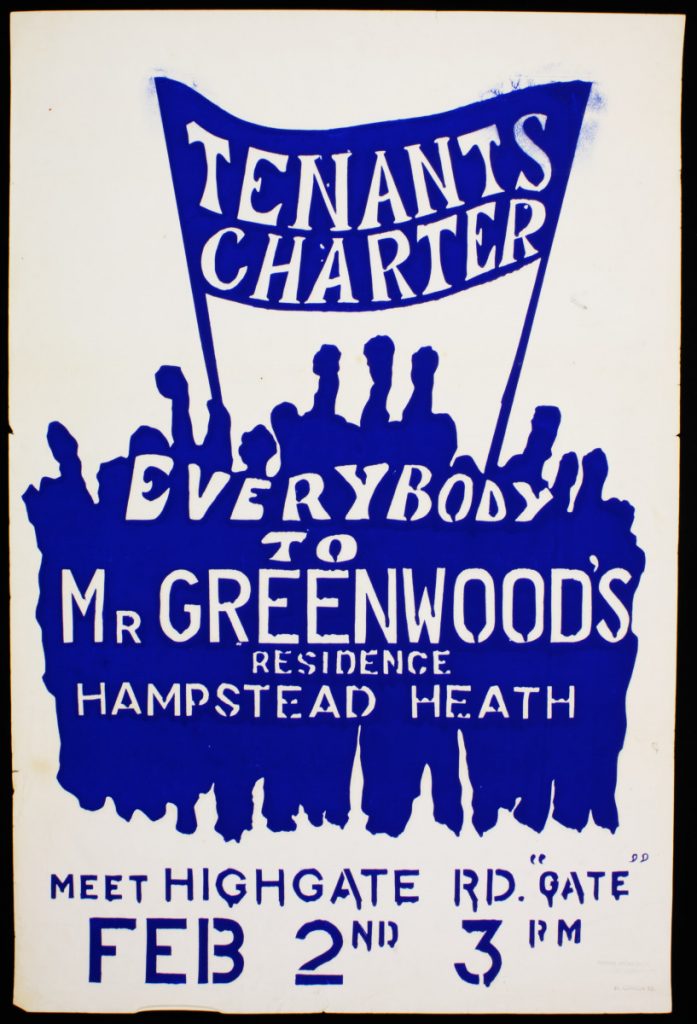
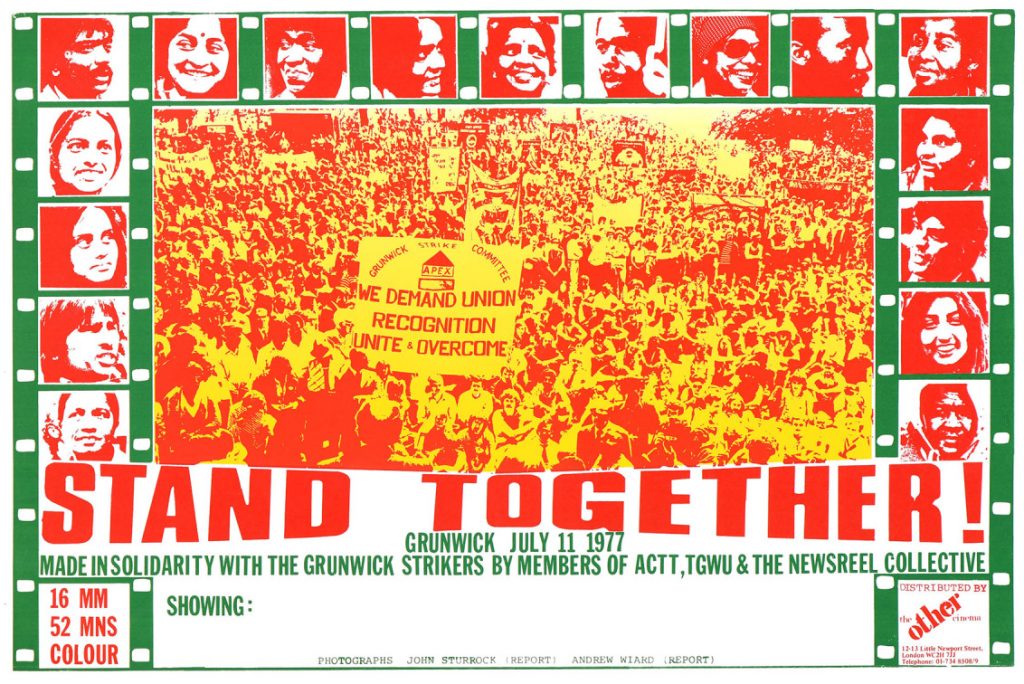
Over the following decade, similar collectives and print shops appeared across the country. Where the Camden Poster Workshop had adopted a similar aesthetic to the Atelier Populaire’s bold single colour designs – like the crowd design on the poster pictured below, reused on numerous posters produced by the Poster Workshop – the collectives that followed developed a more complex visual style. Among the most influential of these were The Poster Collective, Paddington Printshop, and Fly Press – who all feature in the On The Line exhibition.
The Poster Collective was formed in 1972 at the Slade School of Fine Art, University College London, to produce political posters in a coherent visual style, initially in response to the 1972 Miners’ Strike, the Vietnam War, and other anti-colonial struggles.
During the 1970s and 1980s the group continued to expand, working with a broad network of organisations including local and national trade unions, women’s groups, and community organisations. During this period The Poster Collective moved to several locations around London. In 1975 they set up a studio in a large empty factory space in Tolmers Square, near Euston train station. The area had been rescued from demolition by the remaining residents and squatters occupying the empty properties.
The studio was equipped with screen printing presses and darkroom facilities, enabling poster production on a relatively large scale. The collective managed to source materials cheaply, with out of date inks, large rolls of paper, and photographic supplies bought at auction or salvaged from bankrupt businesses. As well as working collectively, members had also taken over a nearby empty house to use as a communal living space. Day to day responsibilities were shared across the group, and they combined their dole money to cover food and expenses.
Following their eviction from Tolmers Square by the council in 1979, the group continued to evolve, finding new ways of working together, creating educational materials and film. They renamed themselves the Poster-Film Collective and worked from a series of locations across London. This included North London Polytechnic, where they remained until they were evicted again in 1989.
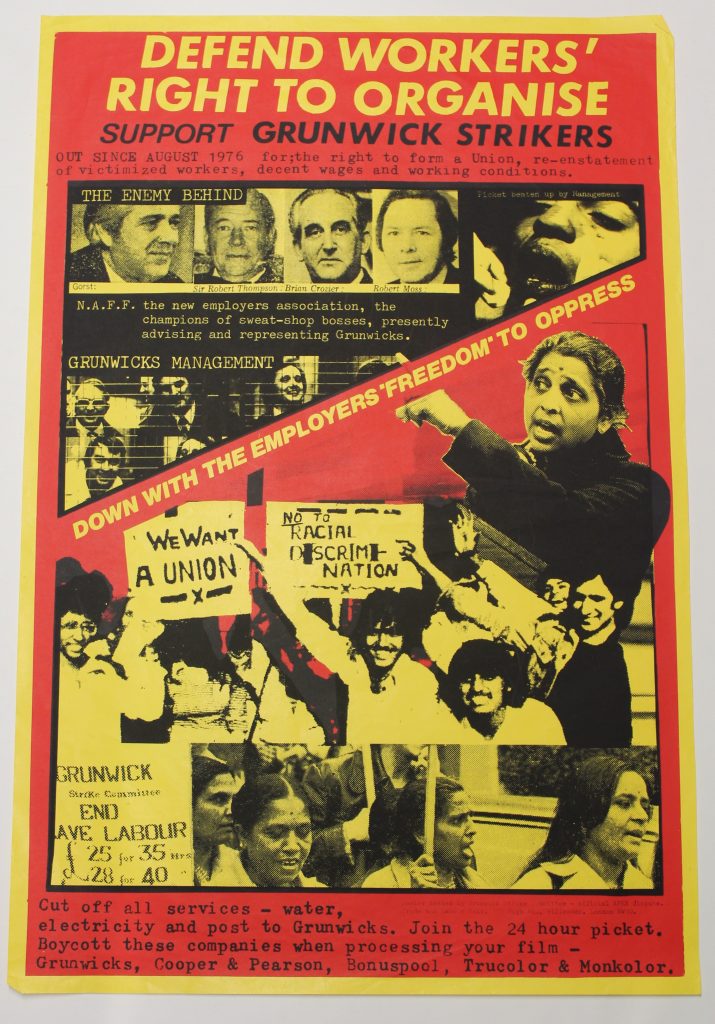
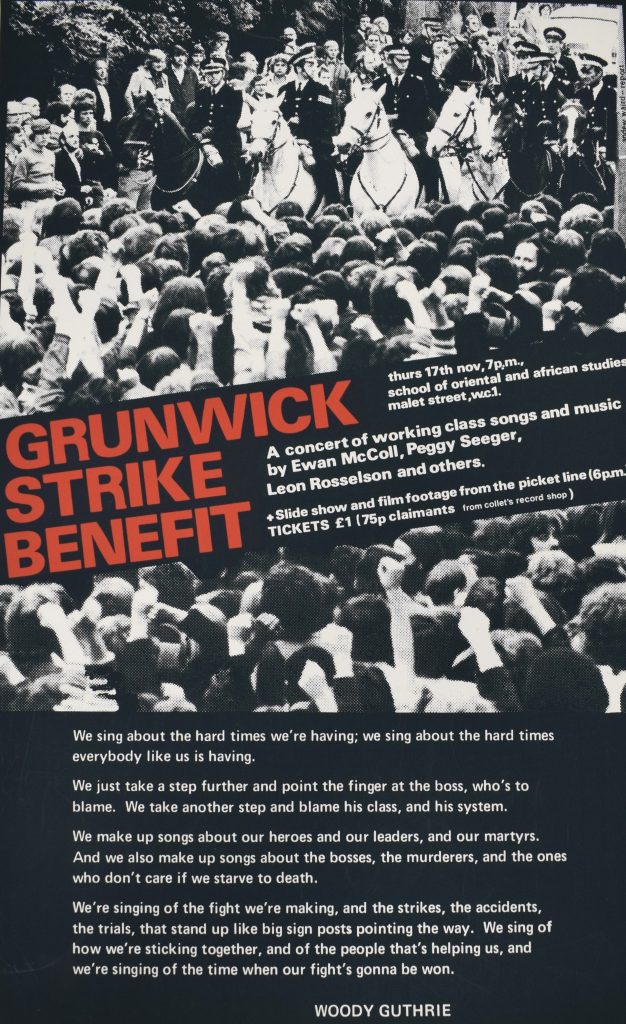
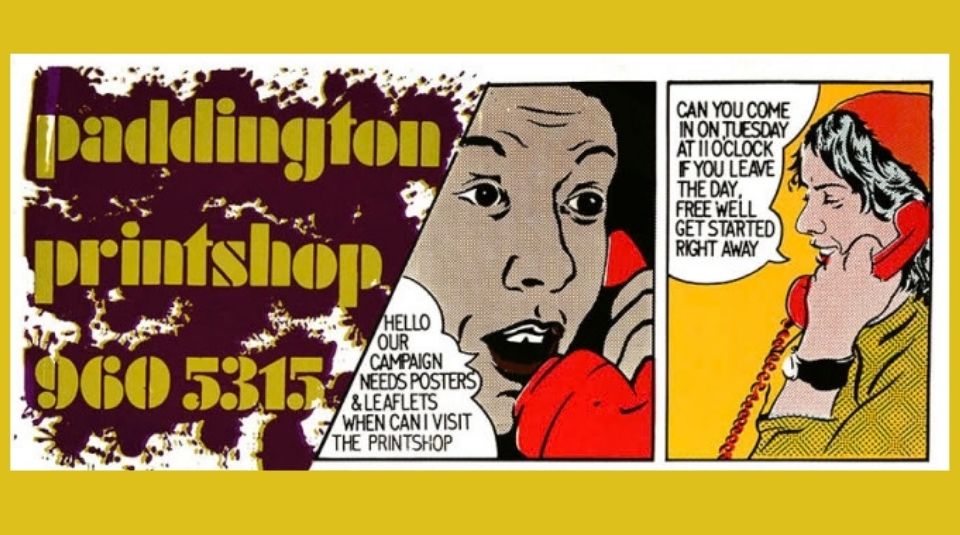
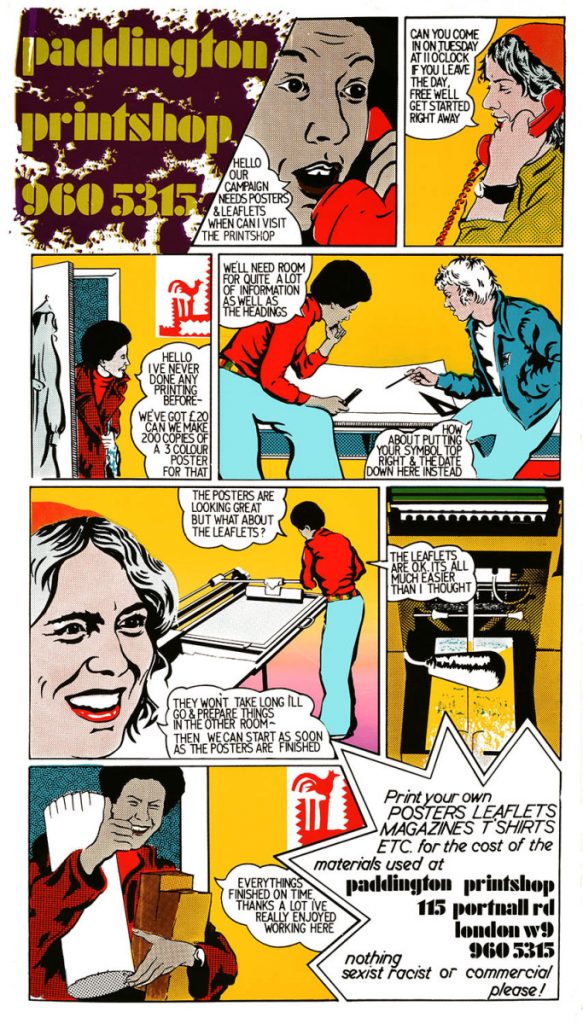
Co-founded by artists John Phillips and Pippa Smith, Paddington Printshop was a community based graphic design and printing workshop. It operated from Maryland’s Community Centre, a semi derelict former taxi meter factory in west London. The space was renamed The Factory, and was soon a thriving hub for grassroots theatre, art, and music. The venue had close links with the Notting Hill Carnival and hosted many acts from the emerging punk and reggae scenes – all of whom were regular users of the Printshop’s services.
Paddington Printshop was among the first community arts organisations in the UK to receive Arts Council support. It was founded with two main objectives: to teach practical skills and to help people use those skills to express their beliefs visually. Over time, the Printshop worked with a wide range of local organisations and activists, producing more than 400 poster designs and many more leaflets. They became a model of community arts and activism, inspiring similar spaces around the country.
The advert pictured below on the left shows how anyone can make a poster, leaflet, magazine, or t-shirt, as long as wasn’t ‘sexist racist or commercial please!’ – you just needed enough money to cover the of cost the materials, although funded organisations would be expected to contribute a little more.
The material in the On The Line exhibition reflects the growing influence of poster collectives and printshops, not only in the presence of the posters and leaflets they produced, but their influence on creative resistance and the DIY spirit they encouraged. Poster making and t-shirt printing became an essential part of the activist’s tool kit. This democratisation of production and approach to art as a collaborative practice can strengthen a movement’s sense of identity and help build wider networks of solidarity.
 Mark Wilson studied Fine Art Printmaking at the Manchester School of Art. During his time as Exhibitions Officer at People’s History Museum he has curated the changing exhibitions Dedicated to all Defenders of Human Freedoms: The Art of Paul Peter Piech (2016) and Savage Ink: The Cartoon & The Caricature (2017), both of which were informed by his knowledge and interest in historical and contemporary radical print.
Book your place on The Art of the Strike guided tour on Thursday 1 October 2026, 12.30pm – 1.15pm.
Explore the eclectic and colourful mix of collections on display in the museum’s galleries, featuring banners, badges, posters, photography and more.
Join a banner making workshop with your learning group, creating your own to take away.
Shop our collection of posters, prints, and postcards to take home or share. All purchases support the museum.
People’s History Museum is open from 10.00am to 5.00pm every day except Tuesdays. Entry is free and most visitors donate £10.
Are you more independent or community focused? Experimental or measured? Prefer work or play?
Take our quick quiz to find out which radical you are!