The 1926 General Strike is often remembered in terms of the men who were involved, and the nine days of official strike action. However, following the strike’s official ending, over one million miners remained on strike, many for the rest of 1926.
In the second of a series of three blogs exploring the strike, Dr Dan Edmonds, PHM and Royal Holloway University of London researcher, tells us more about the crucial role of the women who sustained the strike.
The 1926 General Strike is often remembered, and taught, as a largely male affair. On one level this is unsurprising; the main unions that were called out by the Trades Union Congress (TUC), in railway, transportation, mining, engineering, and dock work, represented largely male workforces.
If it is presented in industrial terms only, as a matter of who was on strike and of which unions sent representatives to the local councils of action, or took part in the TUC General Council, an overwhelmingly male picture emerges.
The strike is also often thought of solely in terms of the nine days of official strike action. But after the TUC General Council called off the General Strike, over one million miners stayed out throughout the course of 1926, many for over seven months. This was a long and bitter dispute.
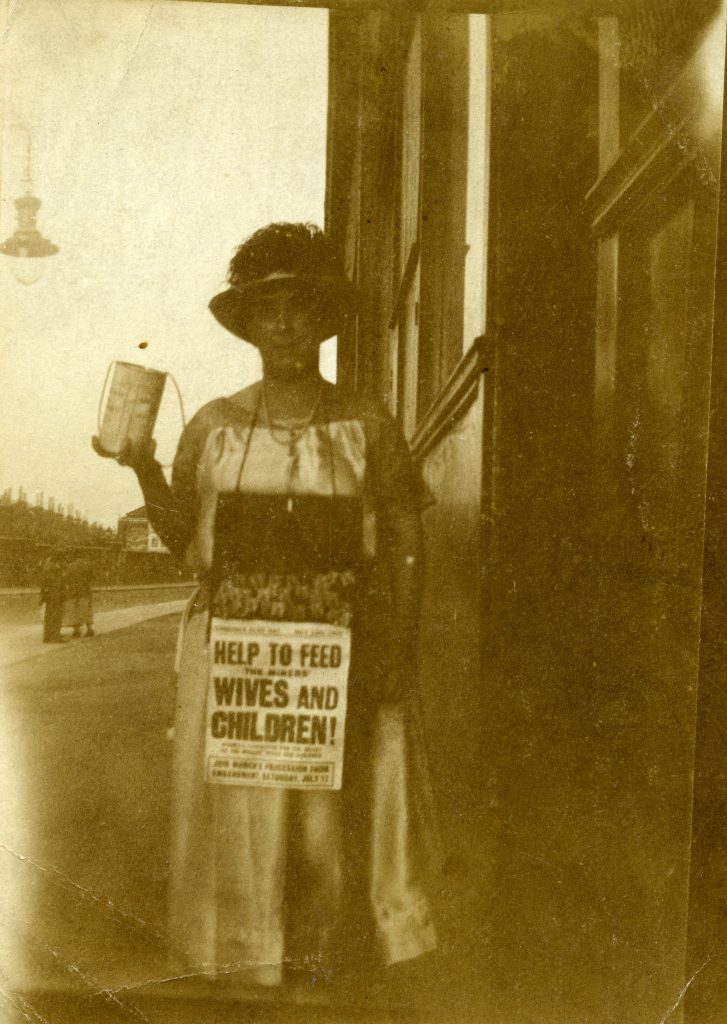
During the miners’ lockout, mining families faced barriers to claiming ‘outdoor relief’, strike pay was low, and in some regions non existent, and people resorted to desperate measures for the basics of life. Poaching, scrumping, picking for coal, and begging all became common place. ‘The Miner’, the newspaper of the Miners’ Federation of Great Britain, even advised readers on how to make the most of their allotments. It was in this context of grinding poverty during the long dispute that women played a significant role in sustaining and supporting strike efforts.
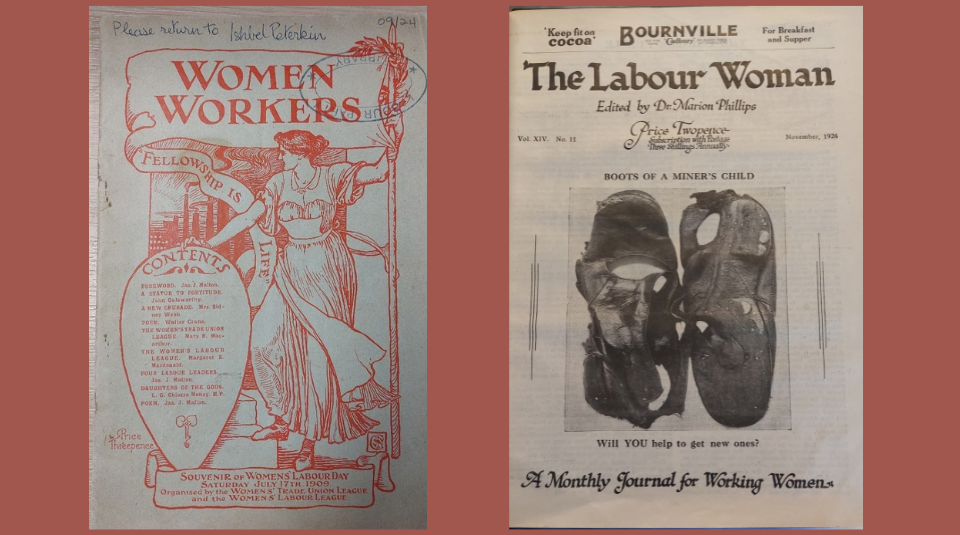
Marion Phillips, the first Chief Women’s Officer of the Labour Party, led the Women’s Committee for the Relief of Miners’ Wives and Children, played a crucial part in the campaign to try and prevent the threat of starvation being wielded against the miners. Phillips had been asked by AJ Cook, General Secretary of the Miners’ Federation, to draw together a committee to help sustain the miners and their families during the dispute once it was clear that they would have to fight on alone.
Phillips, who had previously been a leading member of the Women’s Labour League, had experience in this field. Before the First World War she had been part of a short lived ‘League for Strikers’ Children’ which had aimed to support strikers’ factories during disputes. As with many small organisations, it collapsed during the frenetic days of the war, however its networks and experience (and indeed, residual bank holdings) were key to establishing this new nationwide campaign.
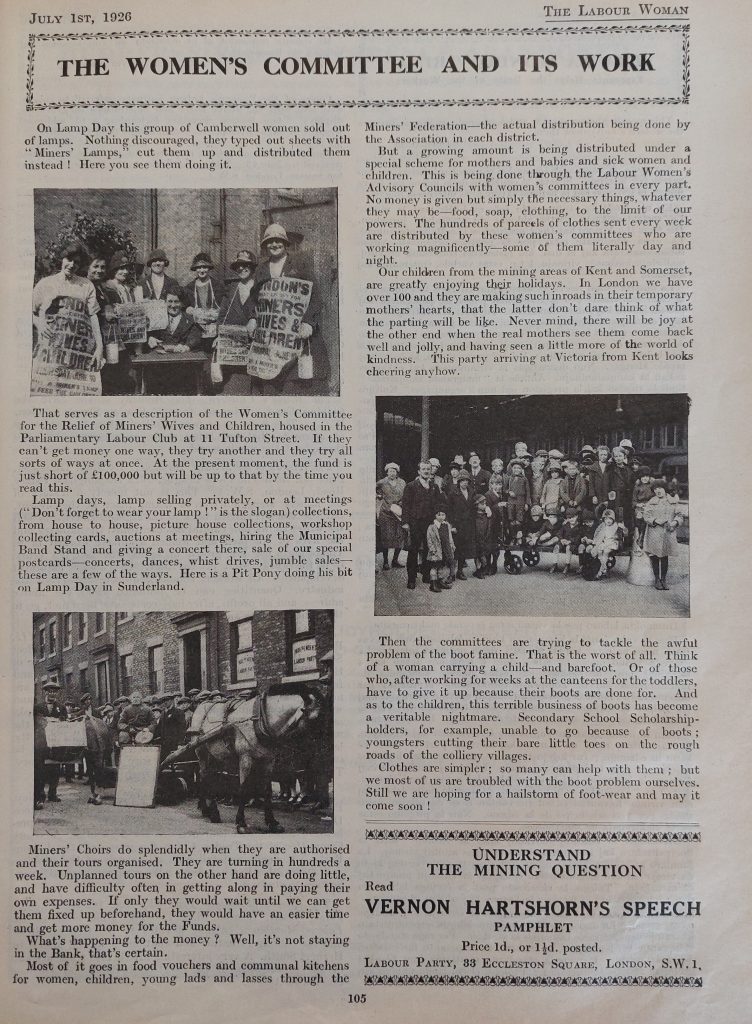
The Women’s Committee soon launched public appeals. Interestingly in the labour activist press, such as the Communist Party of Great Britain (CPGB) controlled newspaper ‘Sunday Worker’, these appeals tended to play on the audiences’ identities as activists, calling on them to take up the task of establishing local distribution and fundraising groups.
To broader audiences, humanitarian appeals were issued which made no mention of the strike, instead emphasising the poverty of pit villages in language akin to describing a natural disaster, calling on people to donate funds to alleviate the poverty of mothers and children. Marion Phillips was canny at appealing to people across the political spectrum; a separate mothers’ and babies’ milk fund was set up which people could donate to if they were ‘worried’ that their donations would sustain striking miners. The appeal was responded to and amplified by donations from prominent individuals including the Prince of Wales (the future Edward VII). There was even a press appeal from contemporary sporting icons including cricketers, tennis players, and track and field athletes, led by Professor Philip Noel-Baker – the only person to have won an Olympic medal (silver for the 1,500m race) and a Nobel prize.
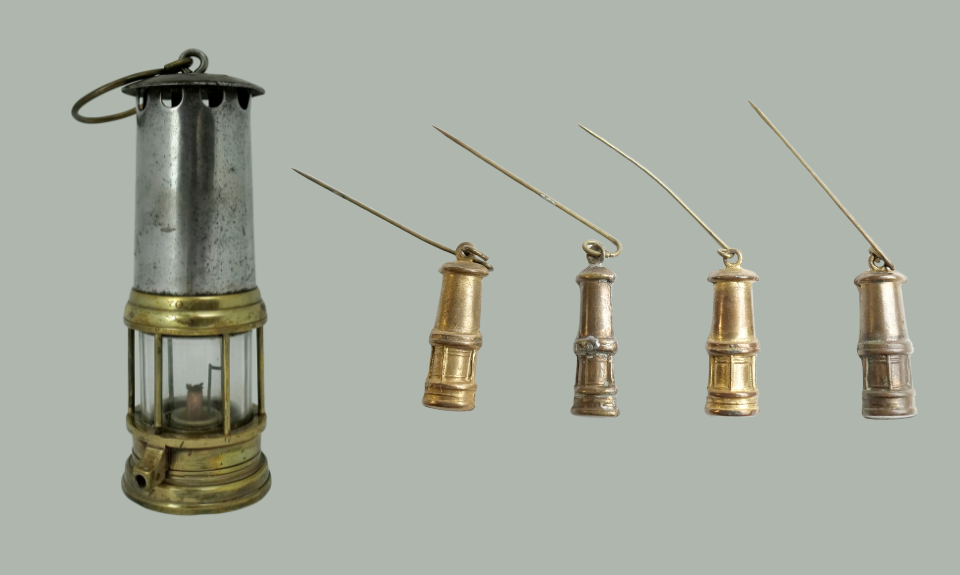
Starting in June 1926, exactly 100 years ago, a series of ‘flag days’ were launched; these were similar to today’s Poppy Appeal, with activists gathering together and selling small wearable tokens of support to raise funds for a cause – while also advertising the cause further. The Women’s Committee decided to use the miner’s lamp as their logo, and rebranded them ‘lamp days’. These proved to be immensely popular; in Camberwell, south London, their first lamp day ran out of badges, and activists instead wrote ‘miner’s lamp’ on pieces of paper and sold them instead! Over 400,000 badges were sold – most were brass, but silver and even gold badges were also sold. The campaign also sold and raffled off full sized replica miners’ lamps, with the item becoming the symbol of solidarity efforts.
The variety of fundraising tactics were extraordinary. Ellen Wilkinson, the firebrand Labour MP and leading light of the Plebs League, travelled to the United States to solicit funds from US labour organisations (Prime Minister Stanley Baldwin condemned her visit and tried to get the American press to publish news that the miners needed no donations!). A group of miners’ wives travelled to Russia, gaining donations from the Soviet trade unions and even organising overseas flag days. Cinemas were sent slides to project at the beginning of films which used ‘non controversial’ language to appeal for funds. Raffles were held, Welsh choirs travelled and held concerts, rallies were put on, trade unions gave regular donations, churches were appealed to – this was an innovative and energetic campaign.
The miners eventually lost, and were forced back to work with worse conditions and no guarantees. Many local leaders of disputes were blacklisted. However the work of the Women’s Committee continued and kept many from facing the most severe effects of poverty.
The story of this campaign and Marion Phillips’s place within the 1926 General Strike introduces us to a range of ways in which women played an active role in the struggle for working class rights in the early 20th century.
The sheer breadth of support for the campaign from outside mining communities shows us how deeply held the ideas of equality and solidarity were by workers across the country. The campaign’s appeals to different audiences using different languages, its use of the miner’s lamp as the central symbol of its work, and the sheer variety of means used to reach different groups show us much about how different movements can communicate.
Finally Marion’s ability to reach across the political aisle – to Independent Labour Party (ILP) and CPGB members to her left, and to sections of the public and political elite who had no sympathy with the strike on her right – demonstrates how important the role of leaders can be in building and sustaining campaigns.
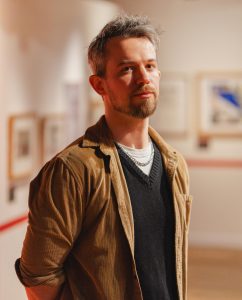
Dan Edmonds is a Royal Holloway University of London (RHUL) researcher working on an Arts and Humanities Research Council funded project, Inclusive Histories. Dan is researching campaigns and activism using the collections of People’s History Museum and the Working Class Movement Library, with learning resources and case studies being developed that can be used to teach a more inclusive British political history GCSE that centres marginalised voices.
Book an appointment to discover more of the collection with the Archive Team via archive@phm.org.uk. Check out the 1926 General Strike archive guide.
Visit the museum’s headline exhibition for 2026, On The Line: 100 years of strikes & solidarity and journey through a century of struggles and stories of strength. On show until 2 November 2026.
Explore related objects in the museum galleries, including brass miner’s lamp badges on display in Gallery One.
Read the first blog in this series, and discover the story of the workers who derailed the Flying Scotsman, and stay tuned for the final blog of the trio, exploring the life of Shapurji Saklatvala, an MP once considered the most dangerous man in Britain.
Subscribe to @apeopleshistory Substack – sharing stories of struggles for rights and representation, with a particular focus on the History GCSE module, Britain: Power and the People c1170 to the present day.
Shop bespoke gifts and souvenirs, including a miner’s lamp pin badge and keyring – a symbol of solidarity efforts.
Are you more independent or community focused? Experimental or measured? Prefer work or play?
Take our quick quiz to find out which radical you are!